Unlike the Enlightenment, which promotes the idea of illuminating in order to bring knowledge and free humans from darkness (and therefore from ignorance) in the site-specific installation Eixir, it is through darkness that the truth shines.
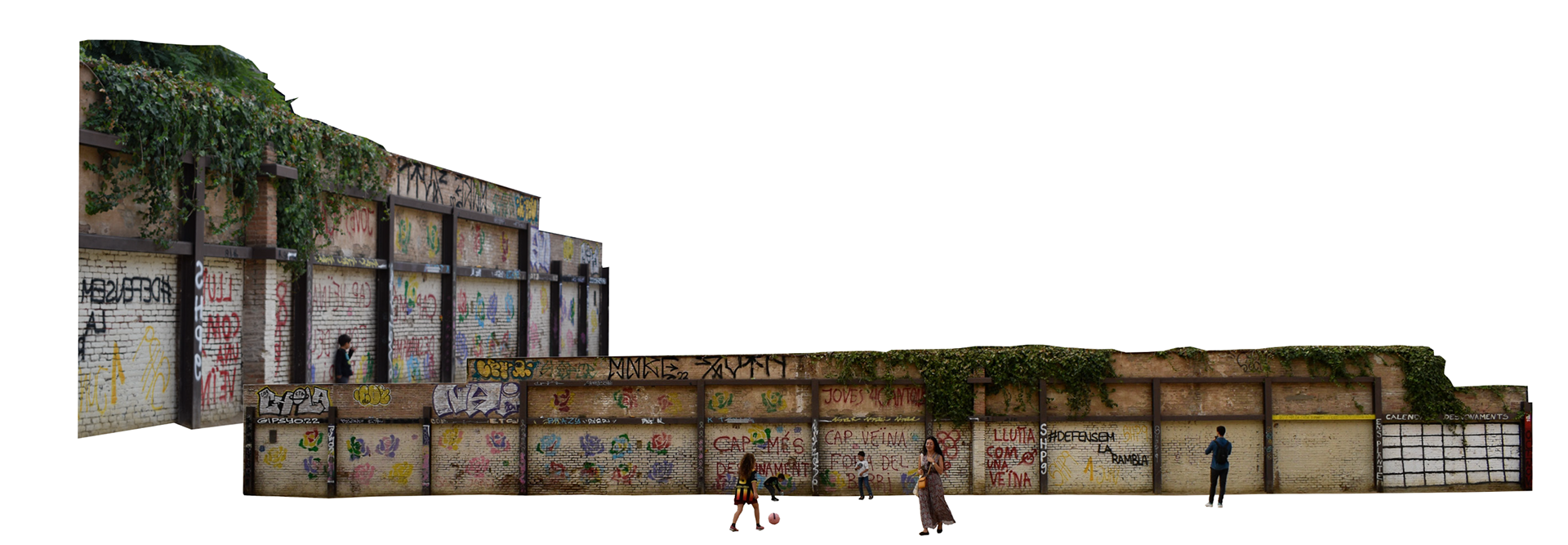

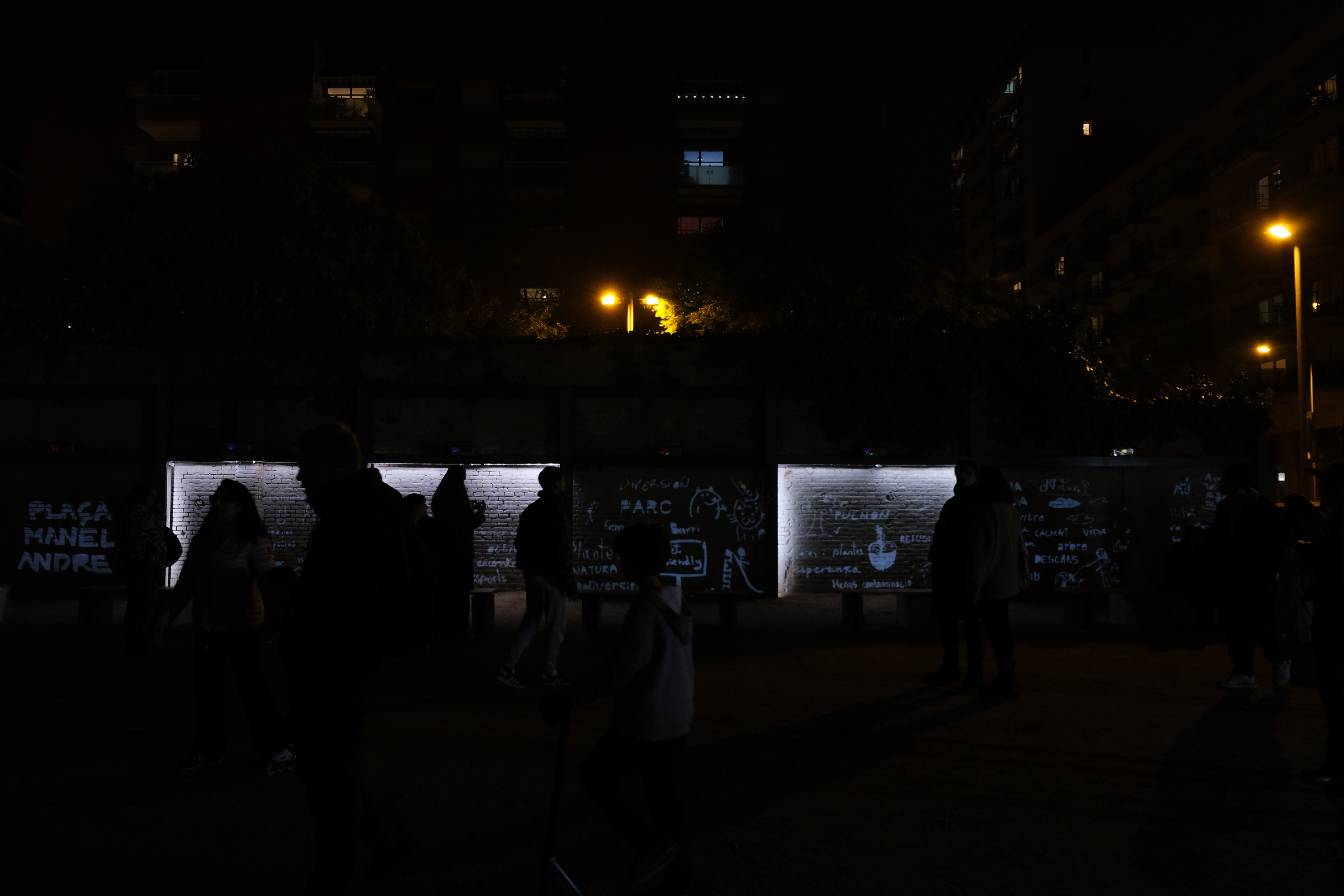
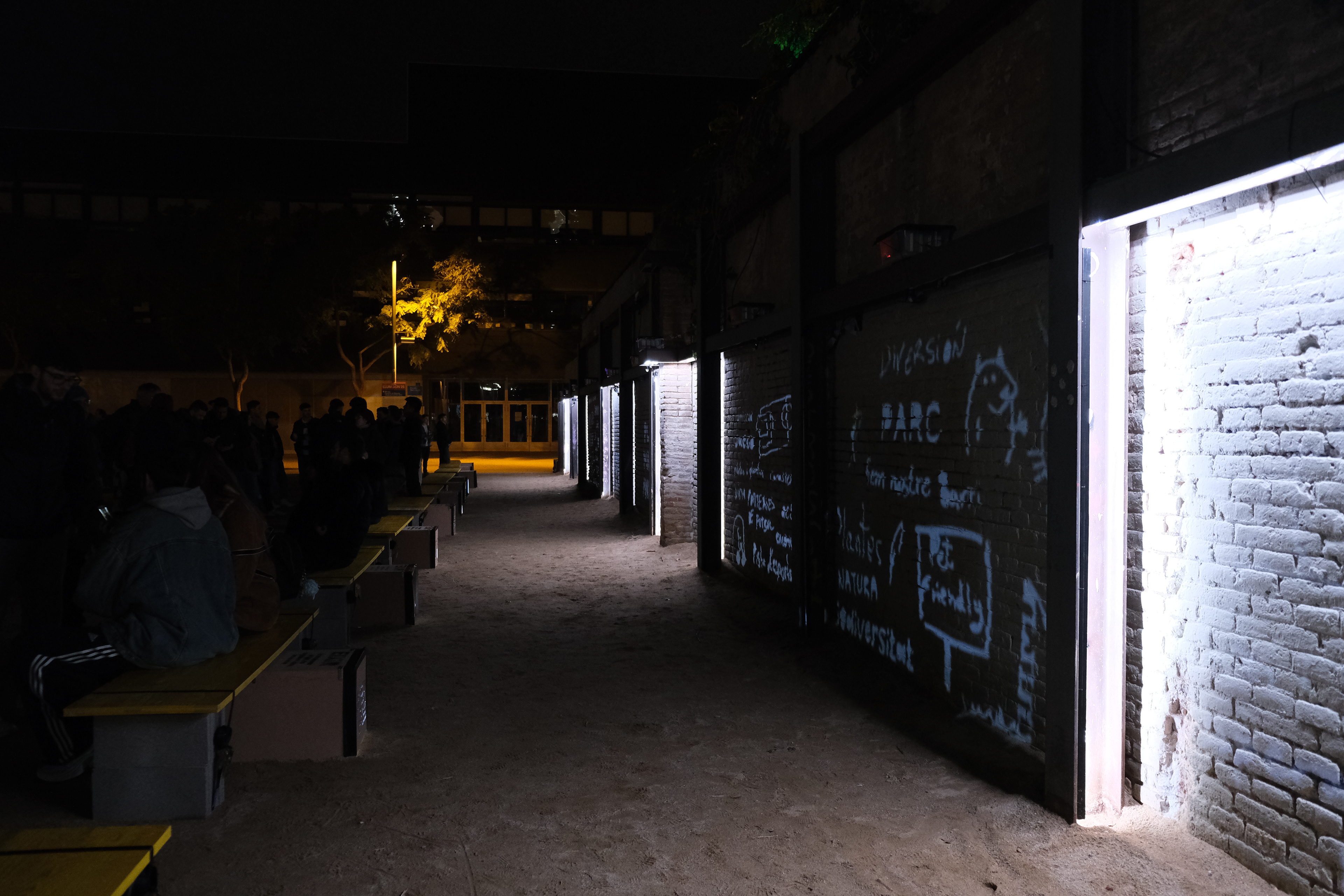
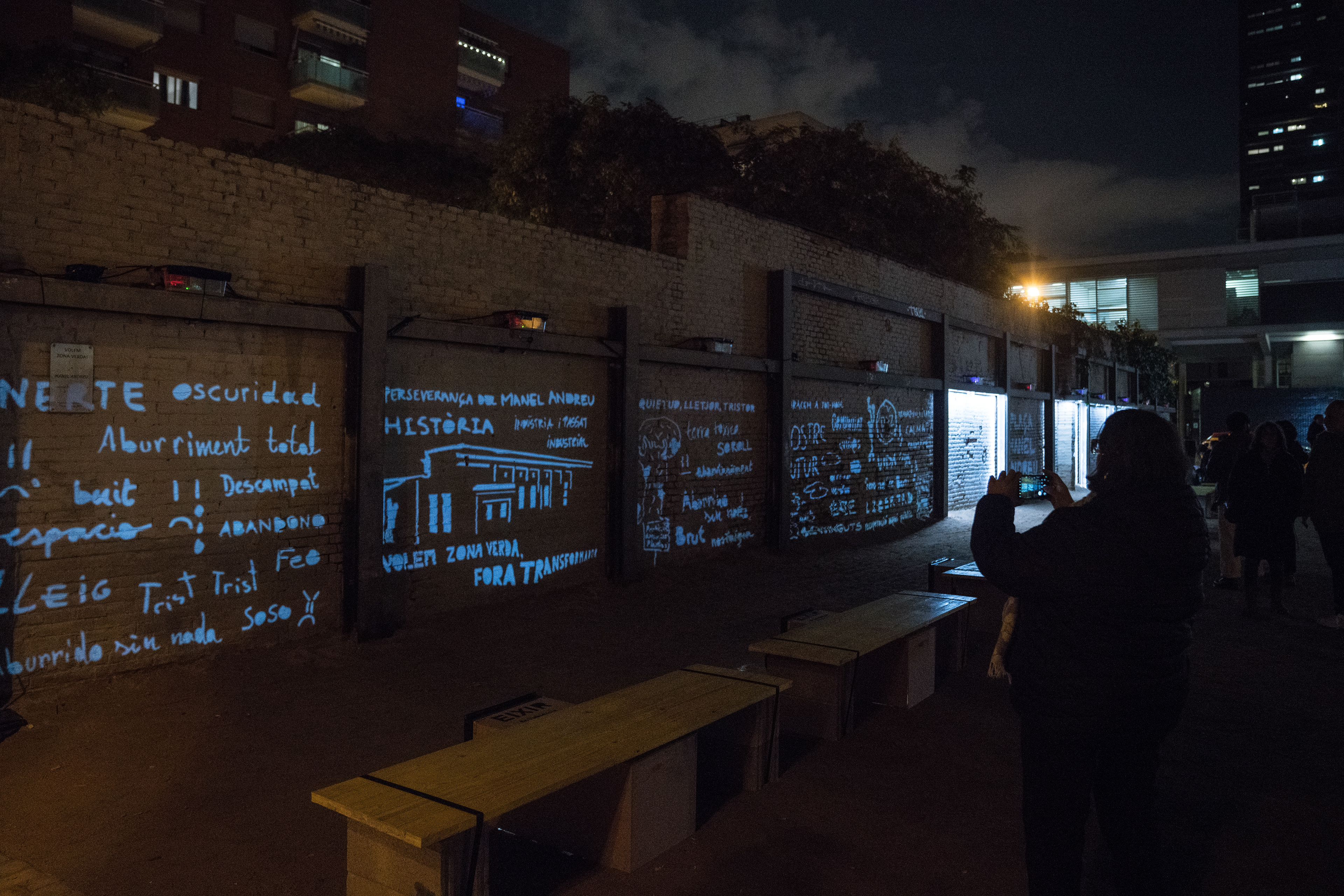
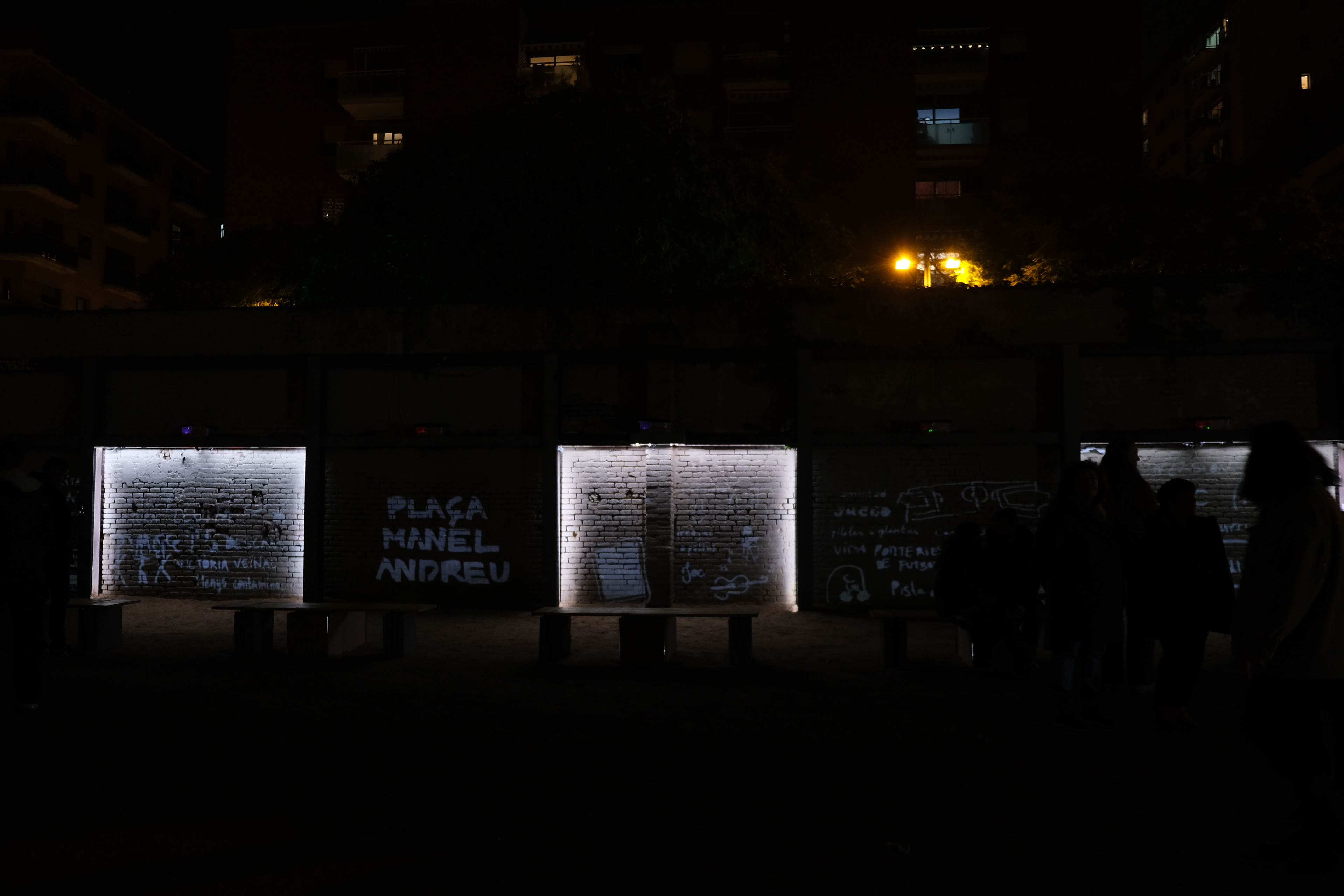
In a festival centered on light, this project challenges the idea that light equals truth. Darkness reveals what light conceals, exposing voices once erased. The wall, covered with residents’ projected graffiti, stays invisible by day and hidden under illumination at night. As visitors approach, sensors trigger zones of darkness where the messages emerge, allowing the neighborhood to speak for itself.
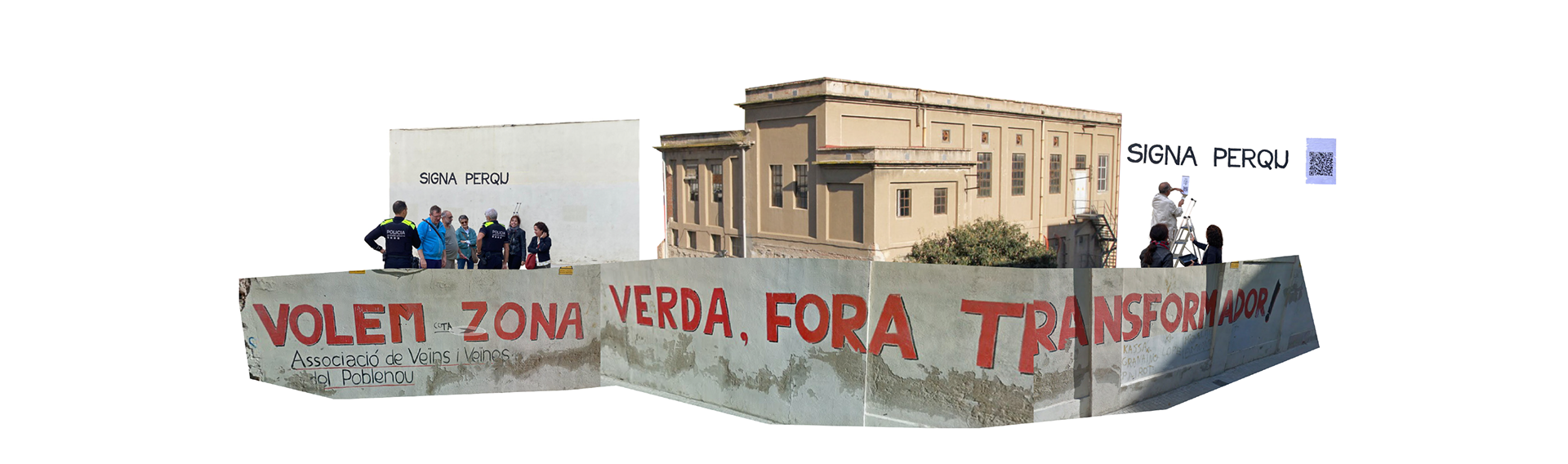
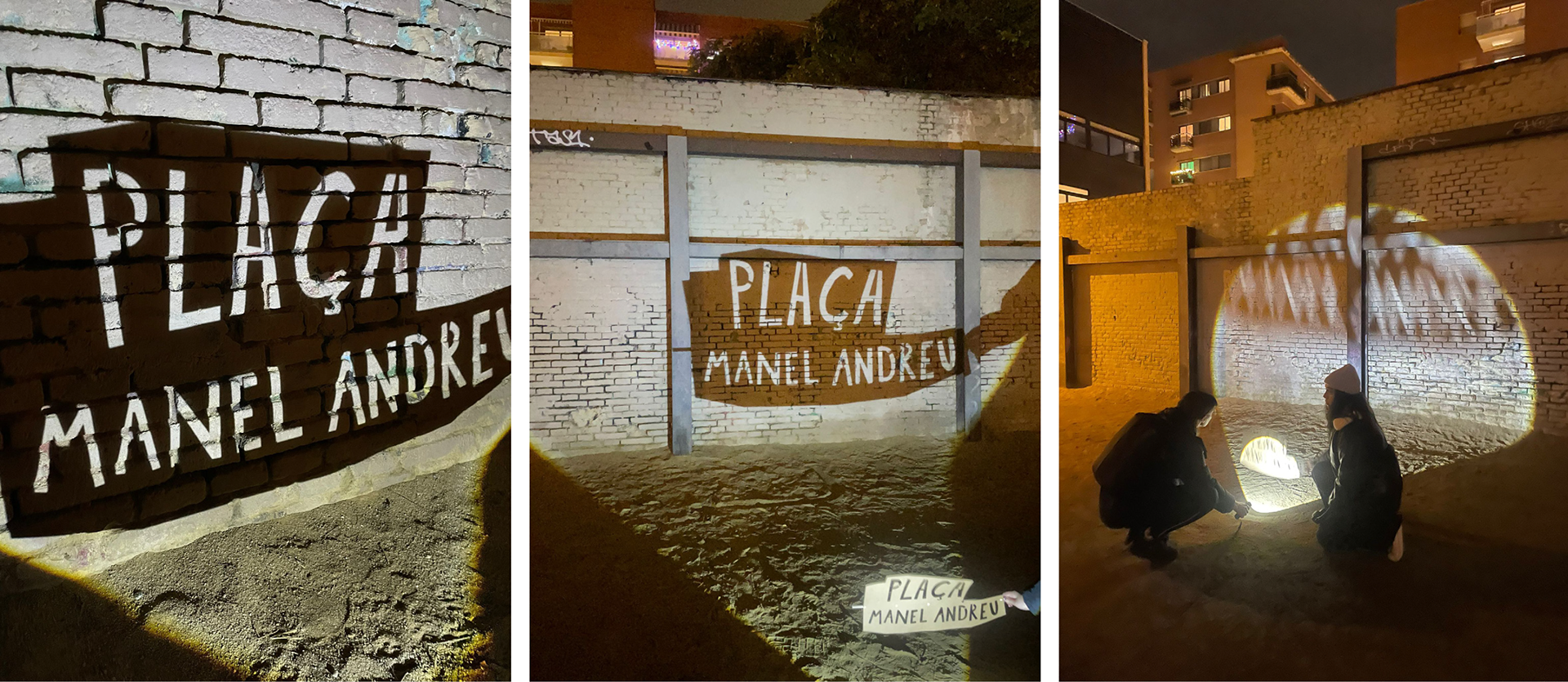
Manel Andreu, a lifelong community leader and founder of the Poblenou Residents’ Association, dedicated his life to the neighborhood, always advocating for solidarity and social justice. After fifteen years of effort, he succeeded in removing the electrical substation in front of the Sant Martí public school, one of his last victories. Residents are now seeking to name the site where it once stood Plaça Manel Andreu in his honor.
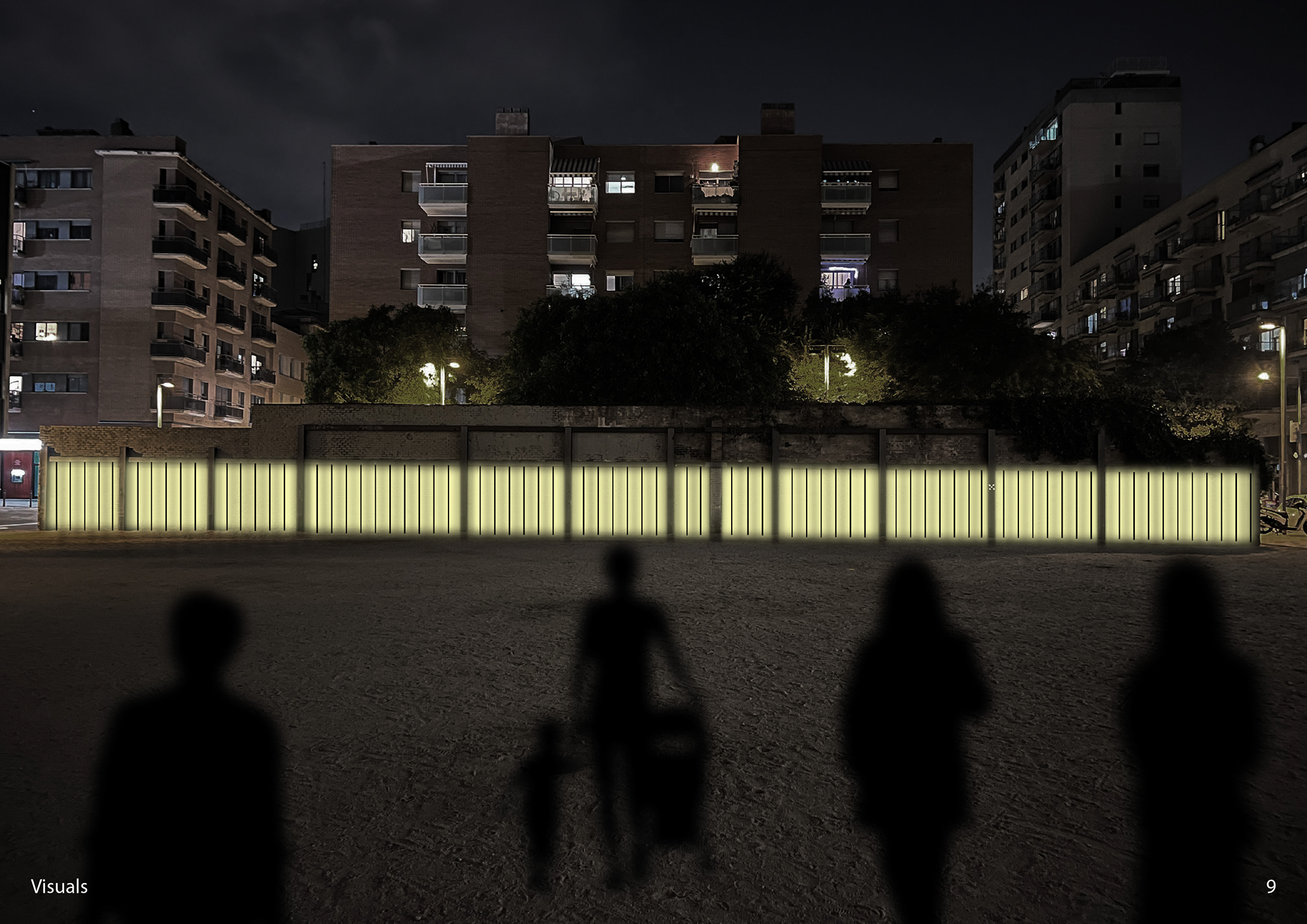
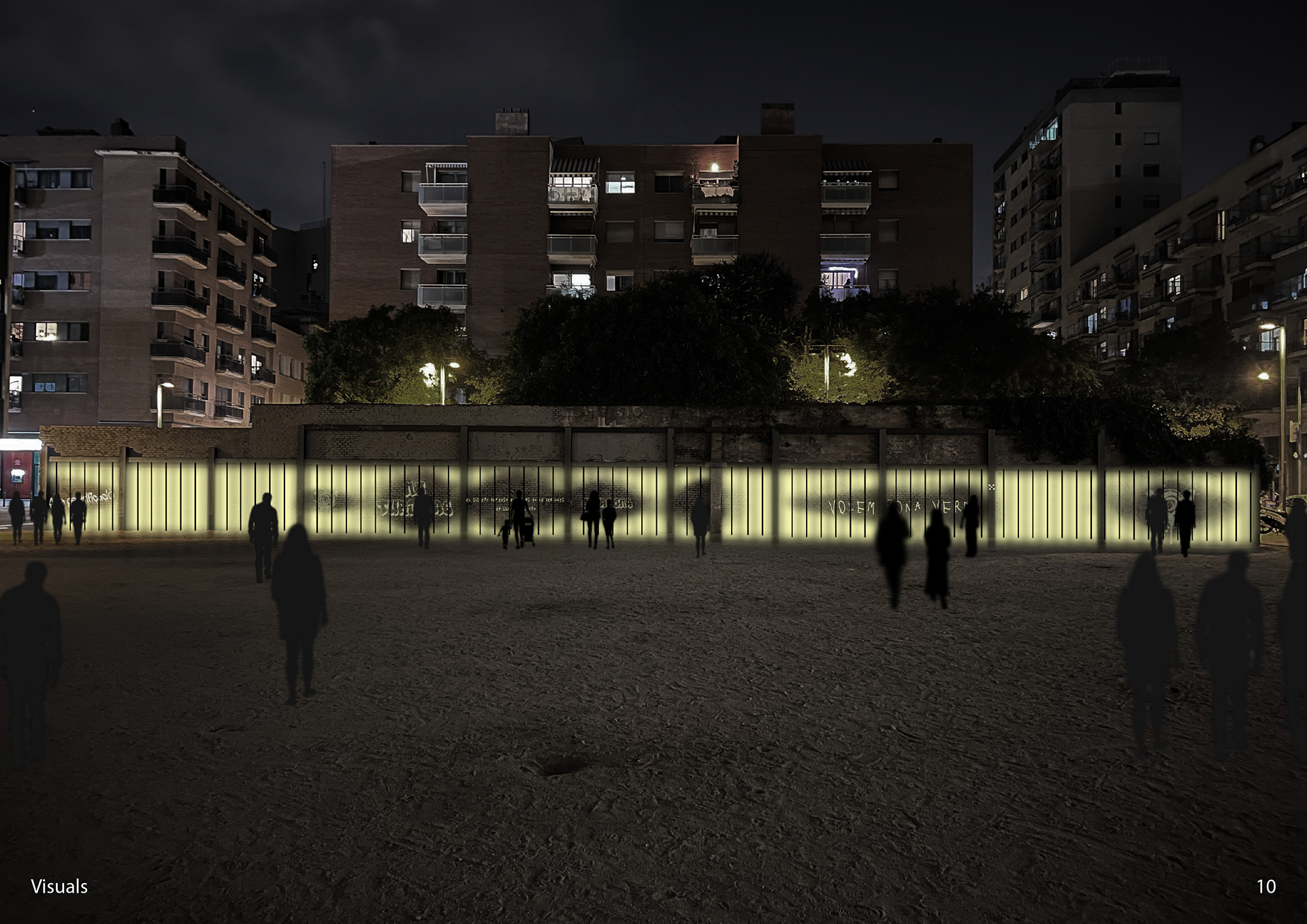
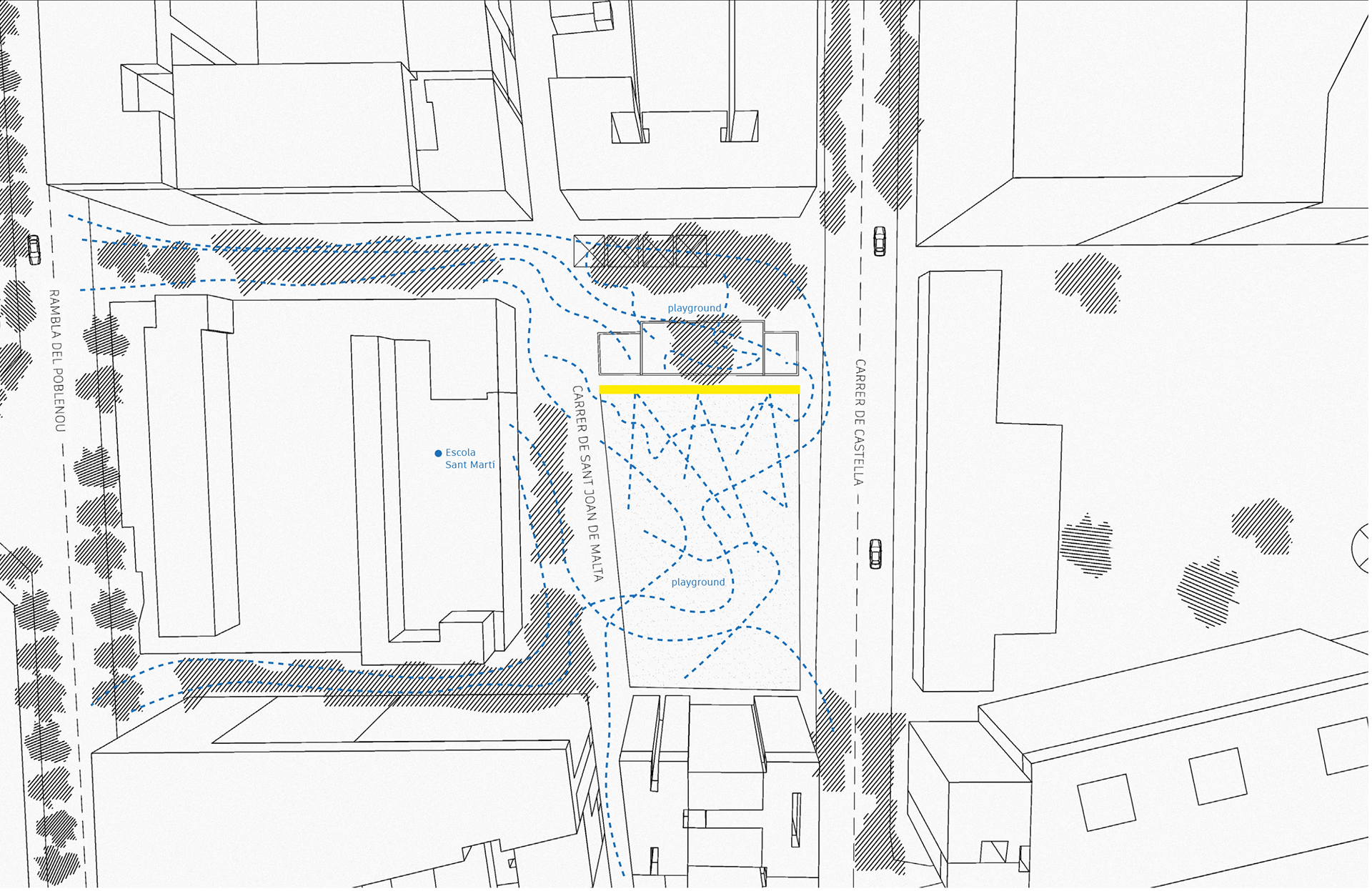
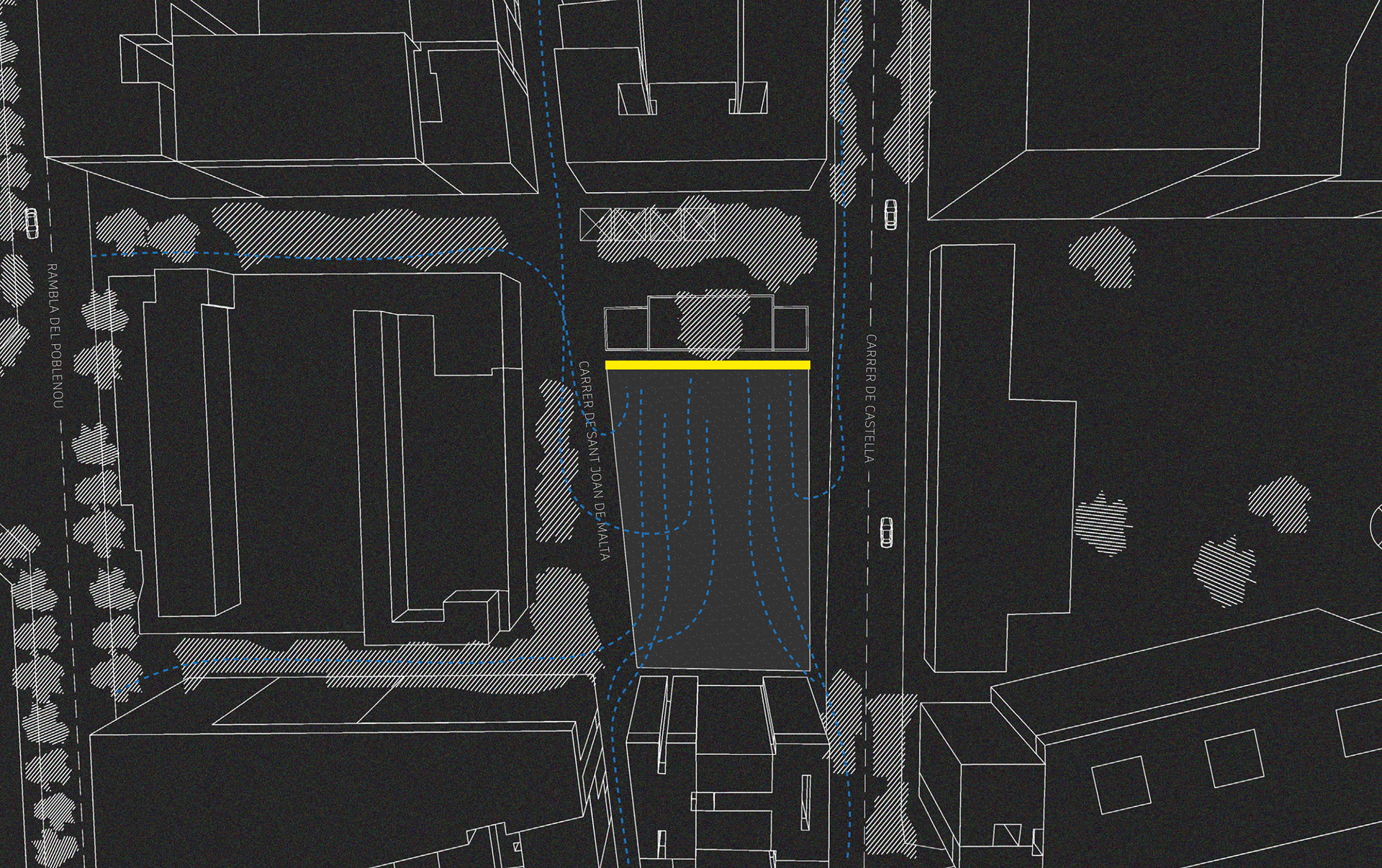
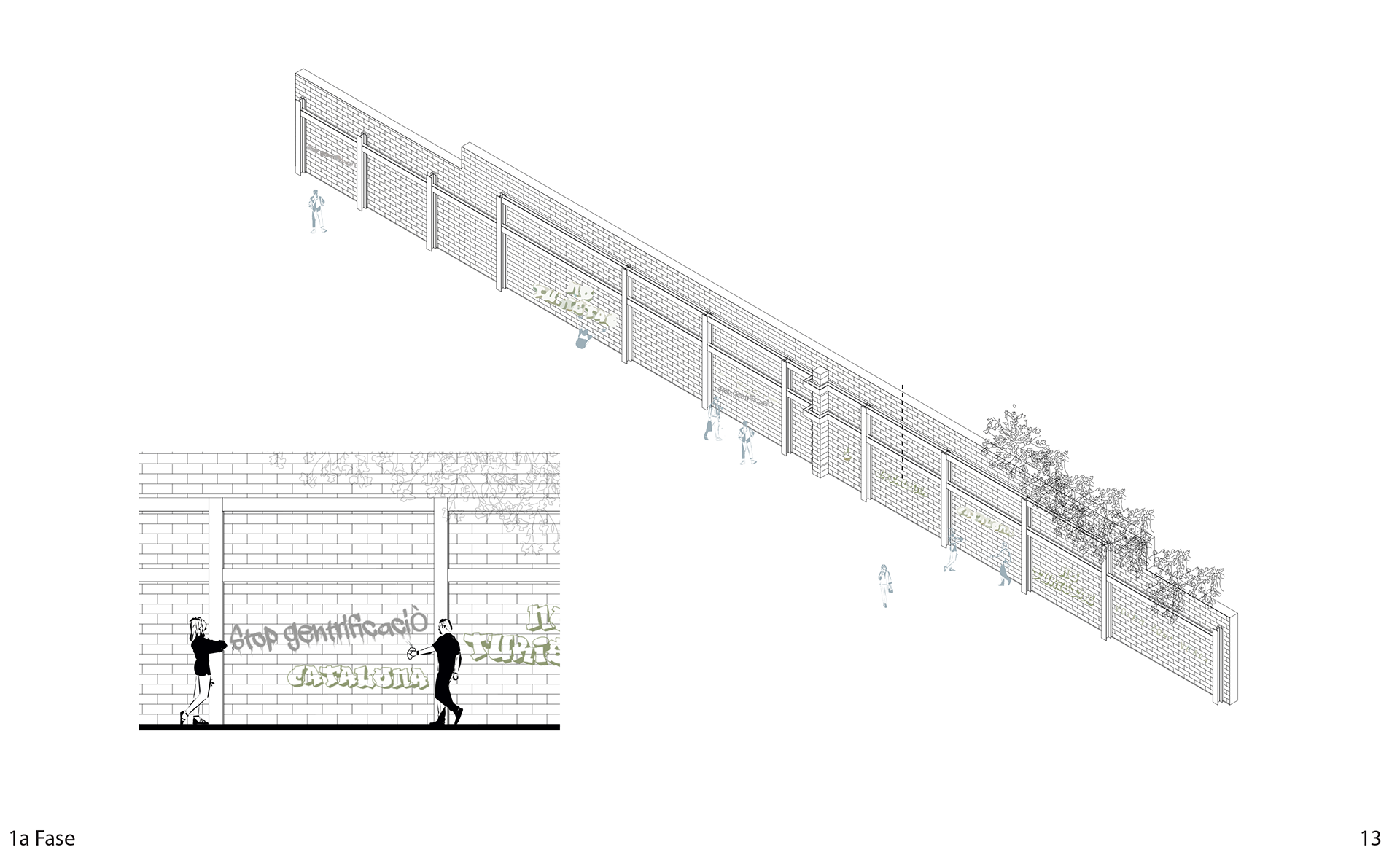
The first phase of the project consists of creating a graffiti mural with the residents on this wall.
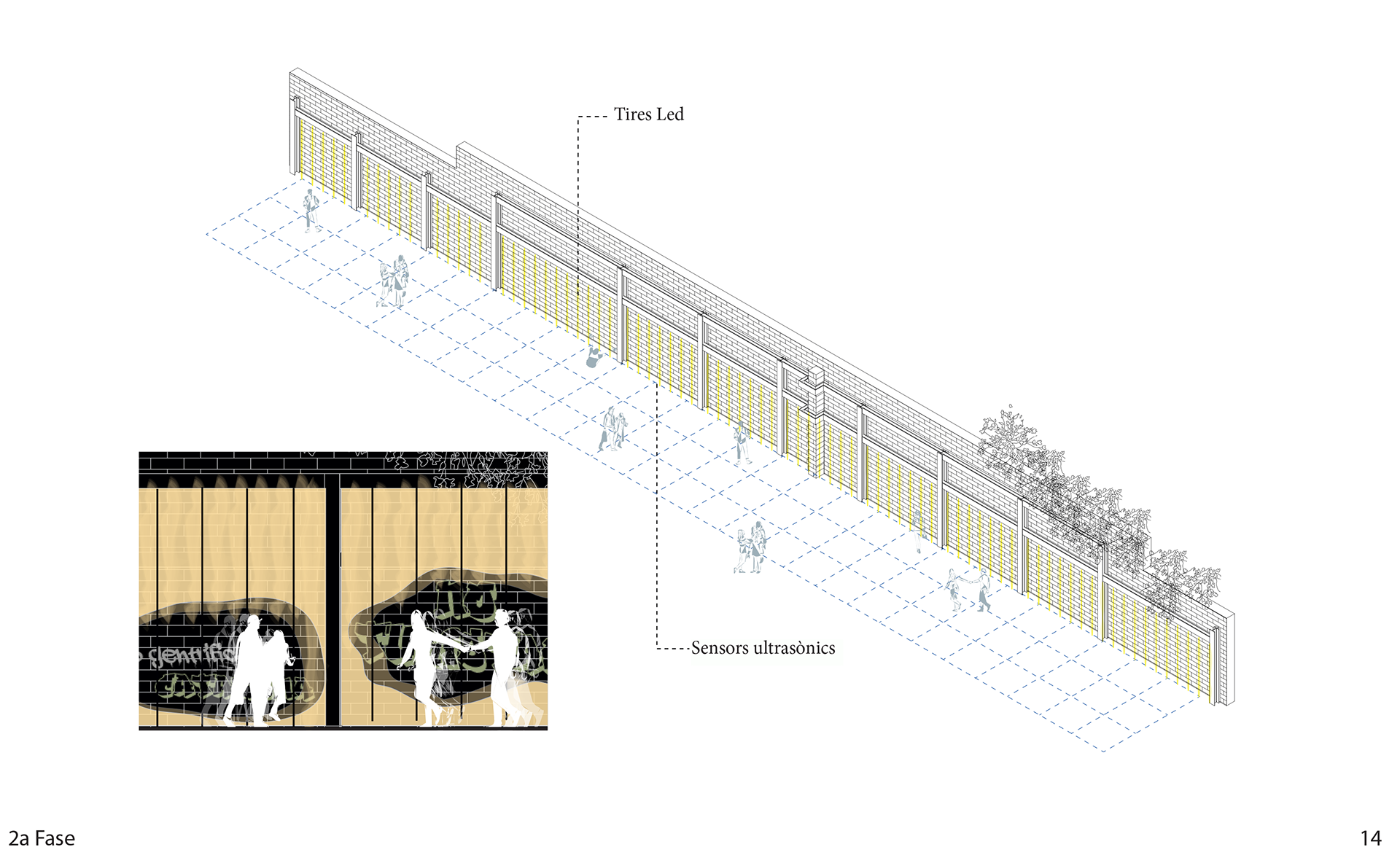
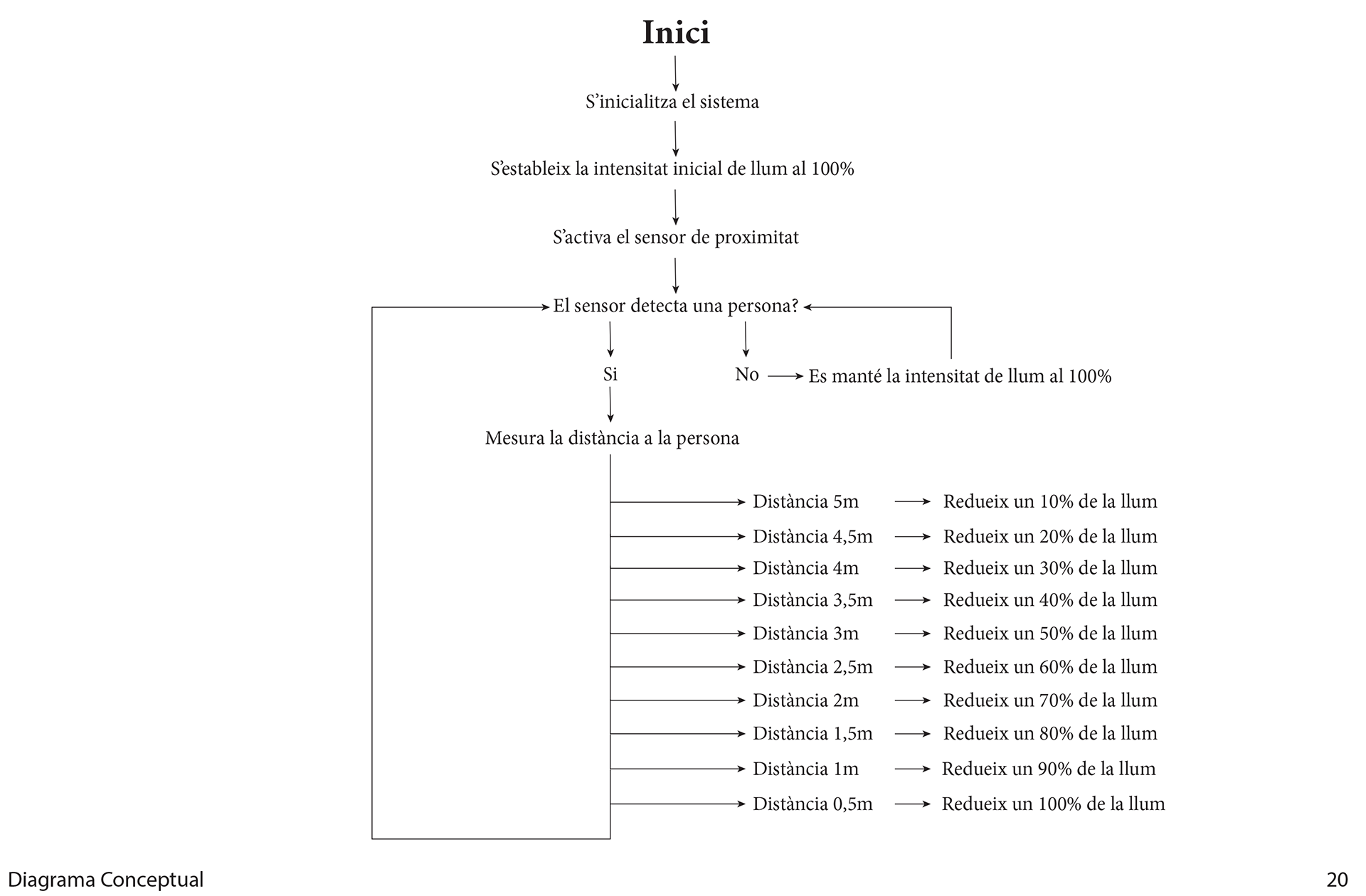
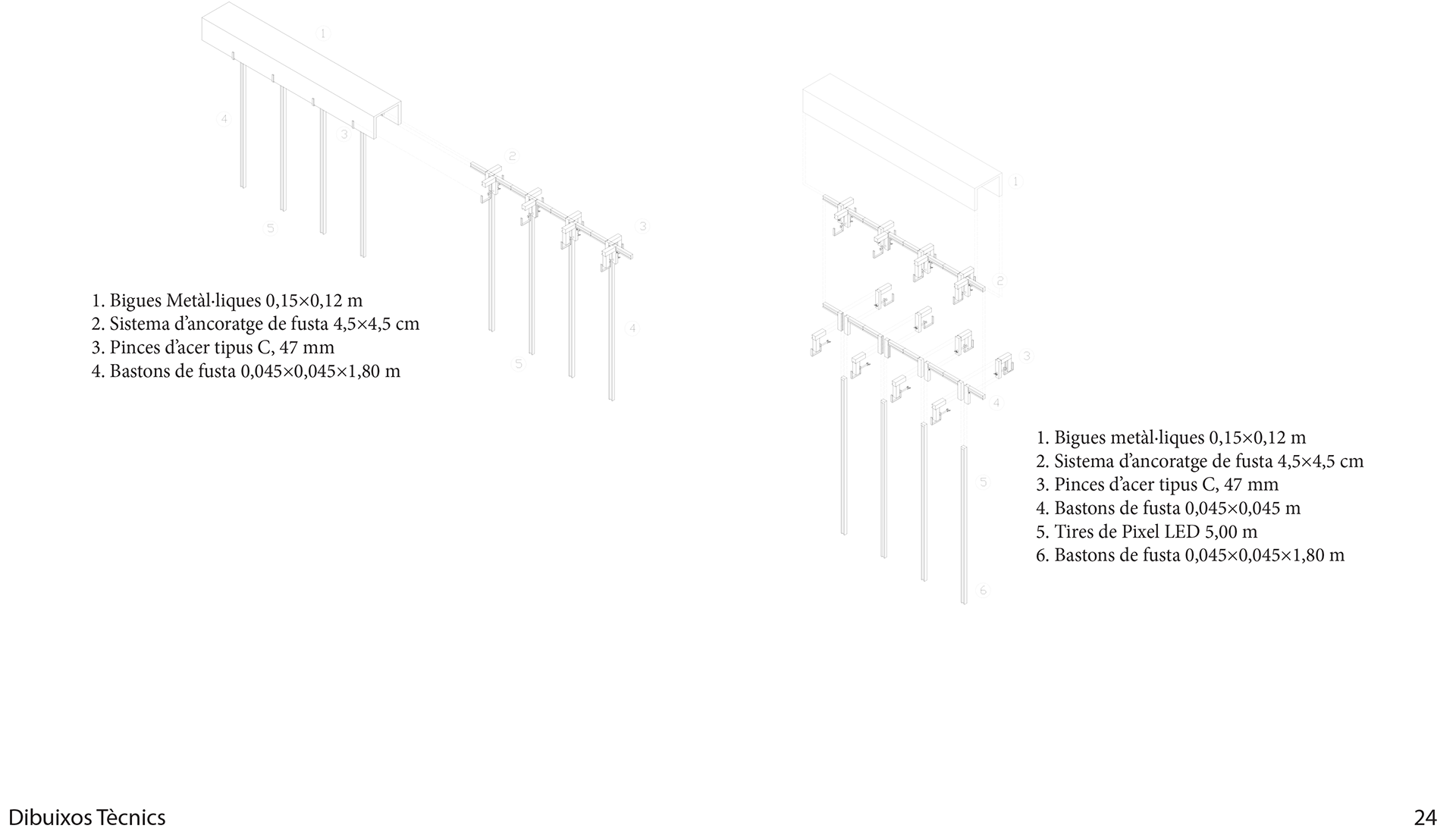
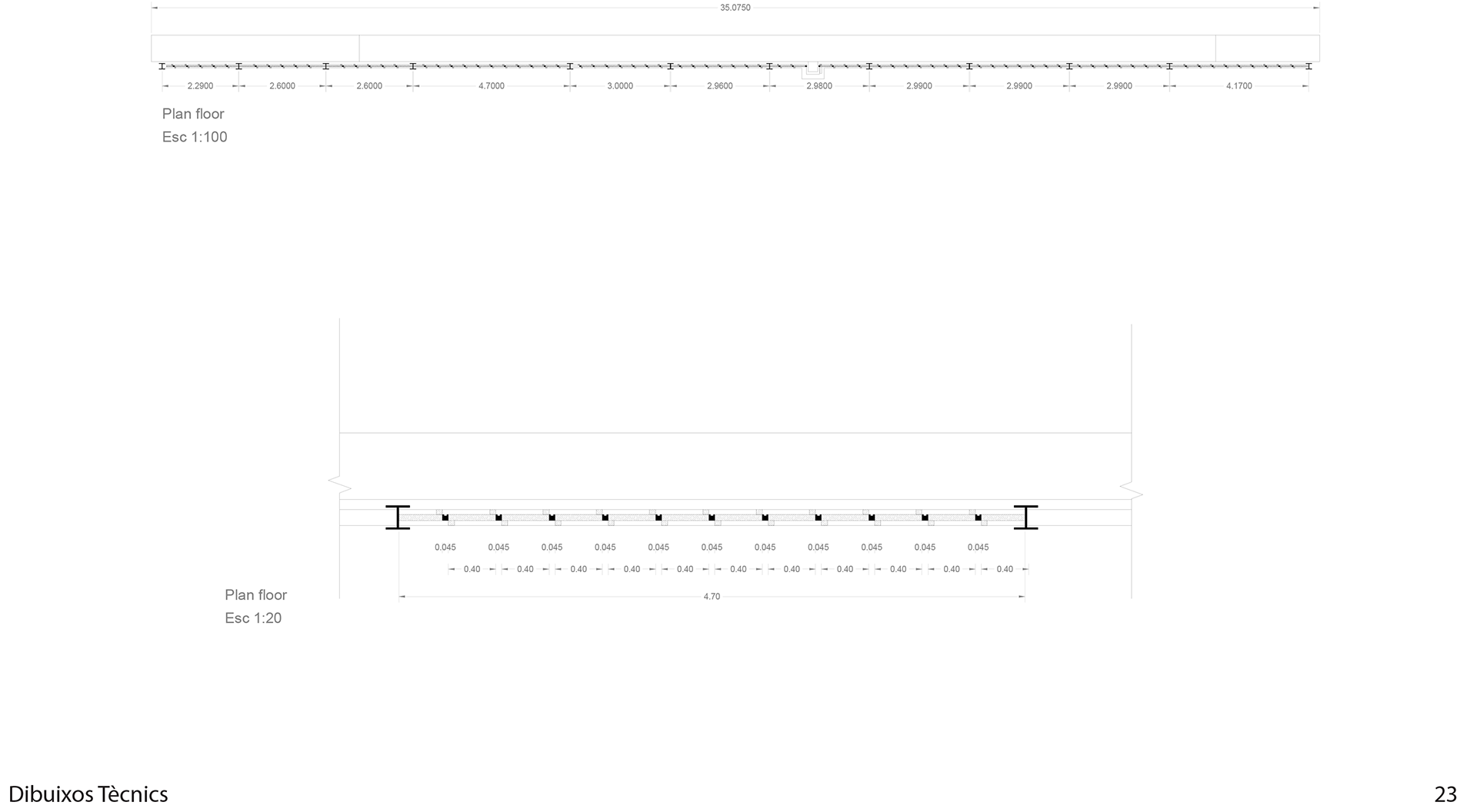
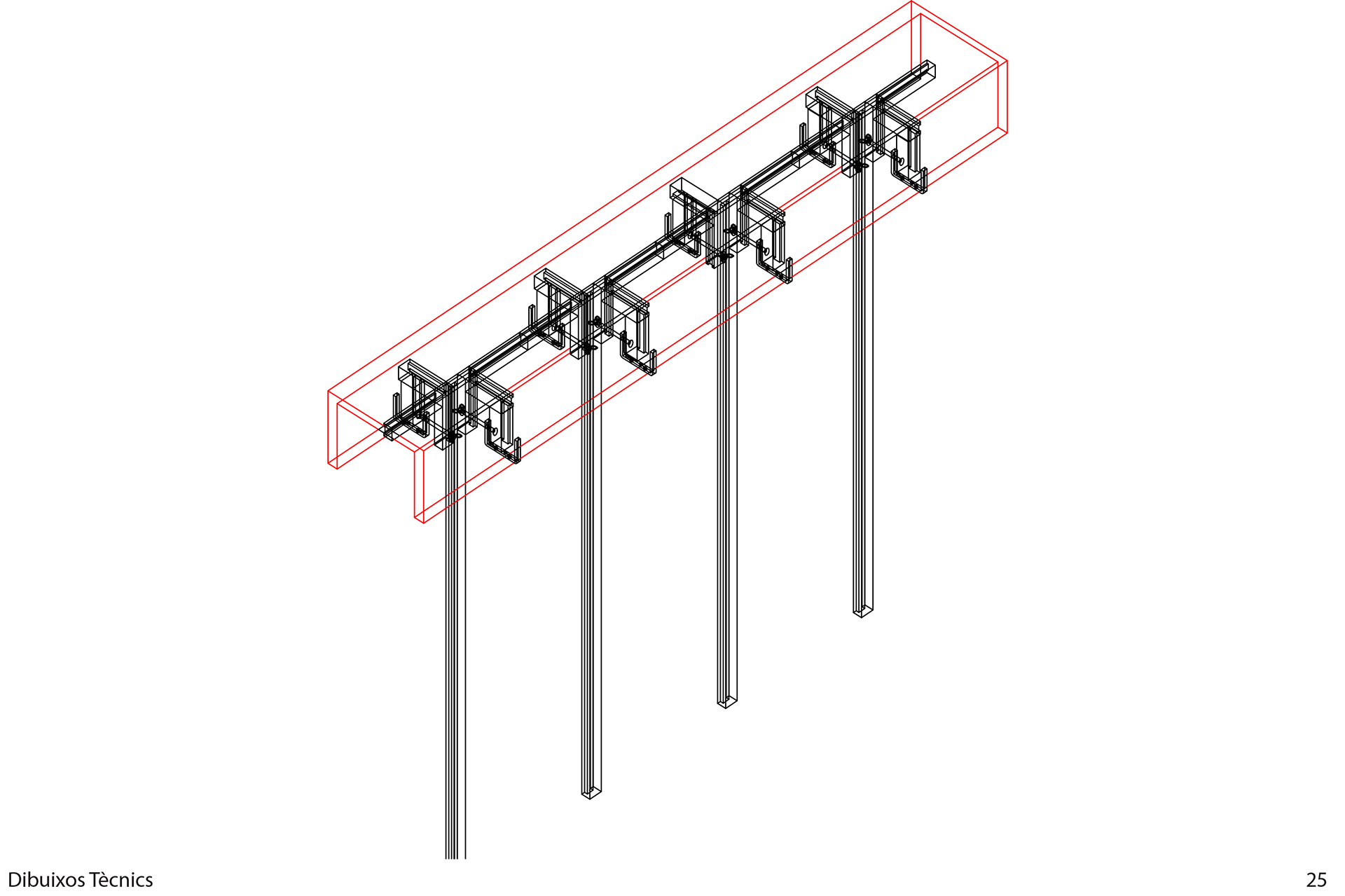
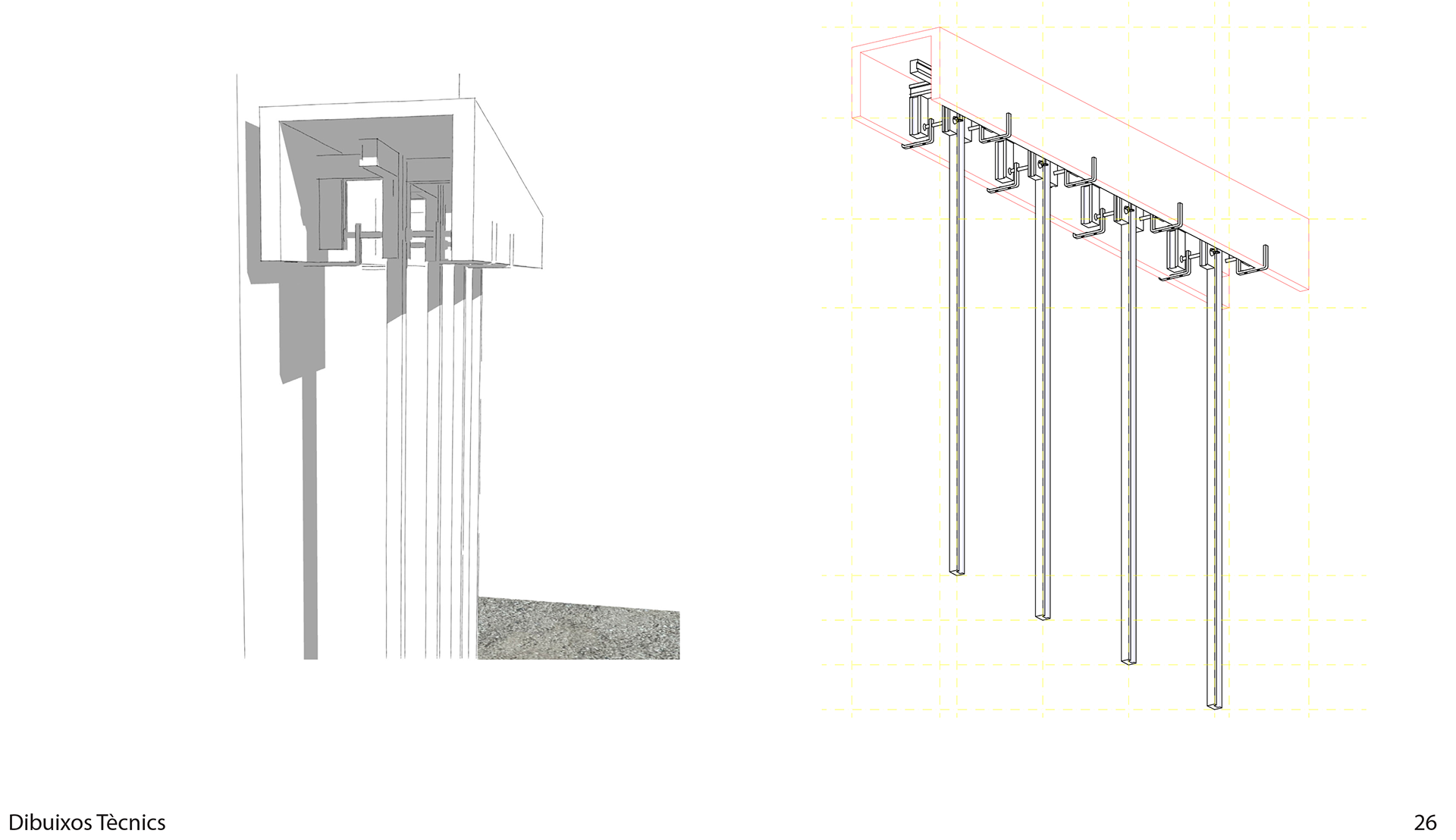
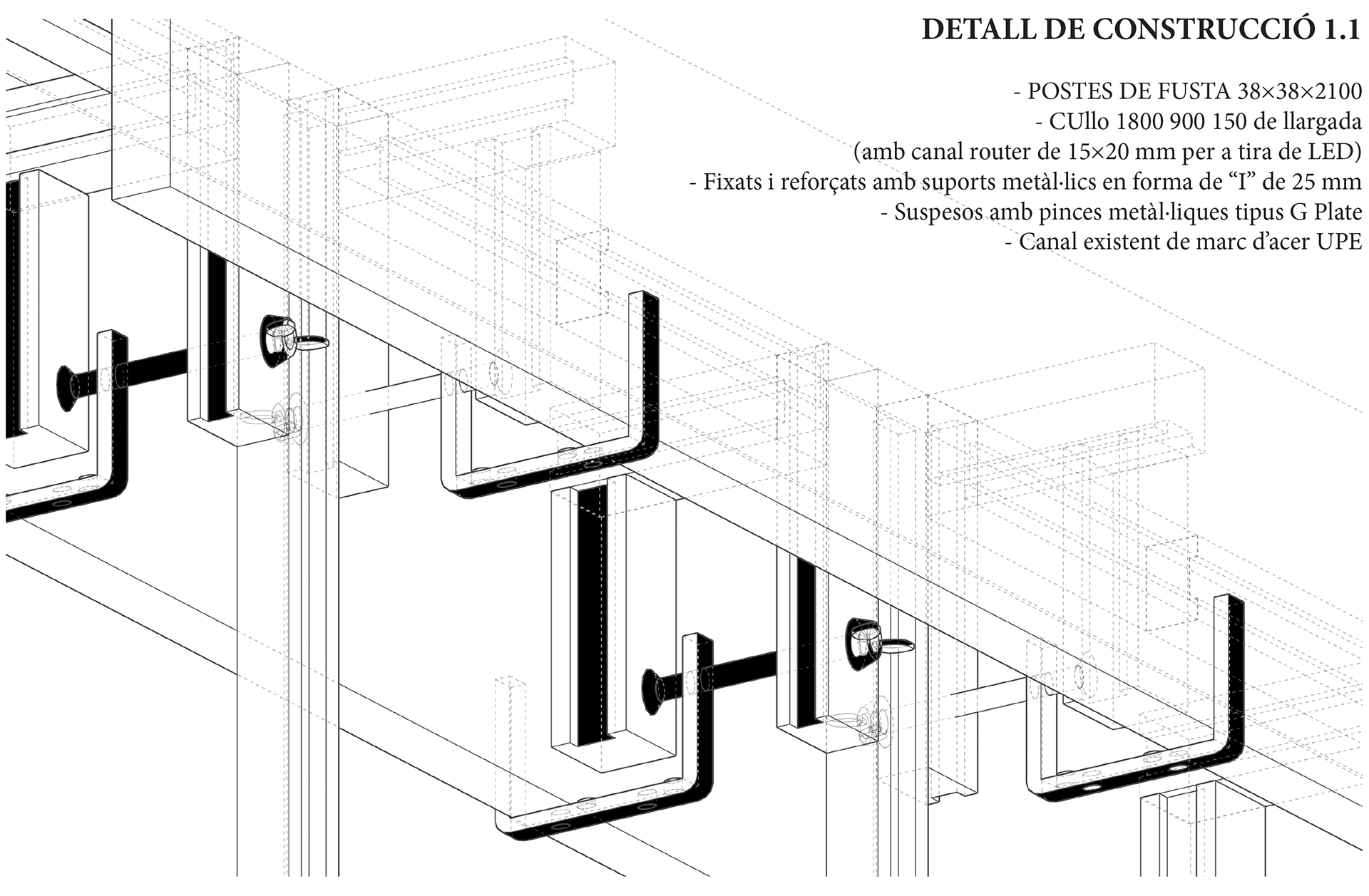
The second phase involves building a structure attached to the existing metal frame, with 80 LED strips arranged vertically and sequentially to illuminate the wall. The default mode will keep the entire wall lit. However, when people approach, sensors will detect their movement and turn off the LEDs, creating bubbles of darkness. In these darkened areas, the residents’ interventions will be revealed.
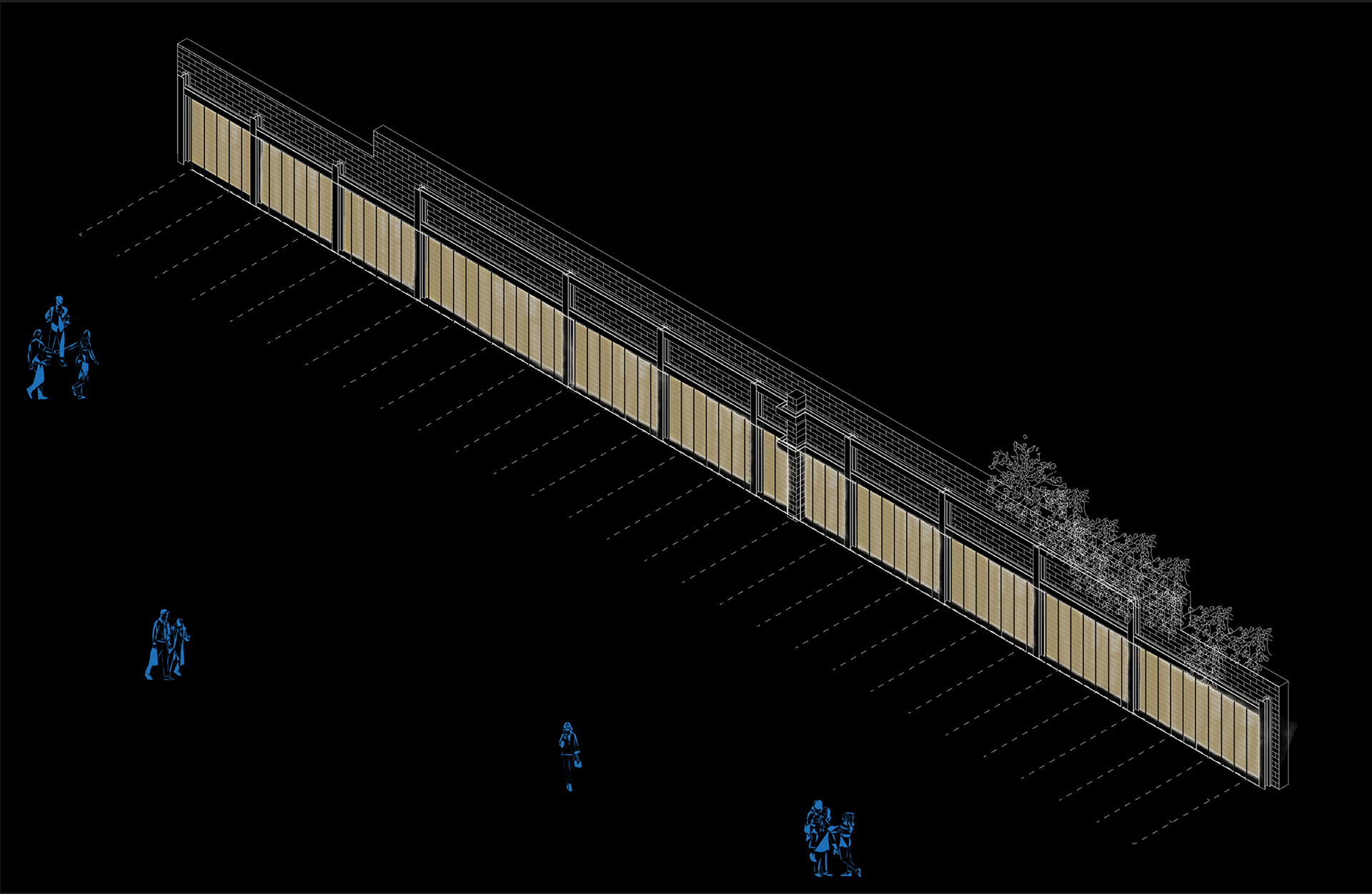
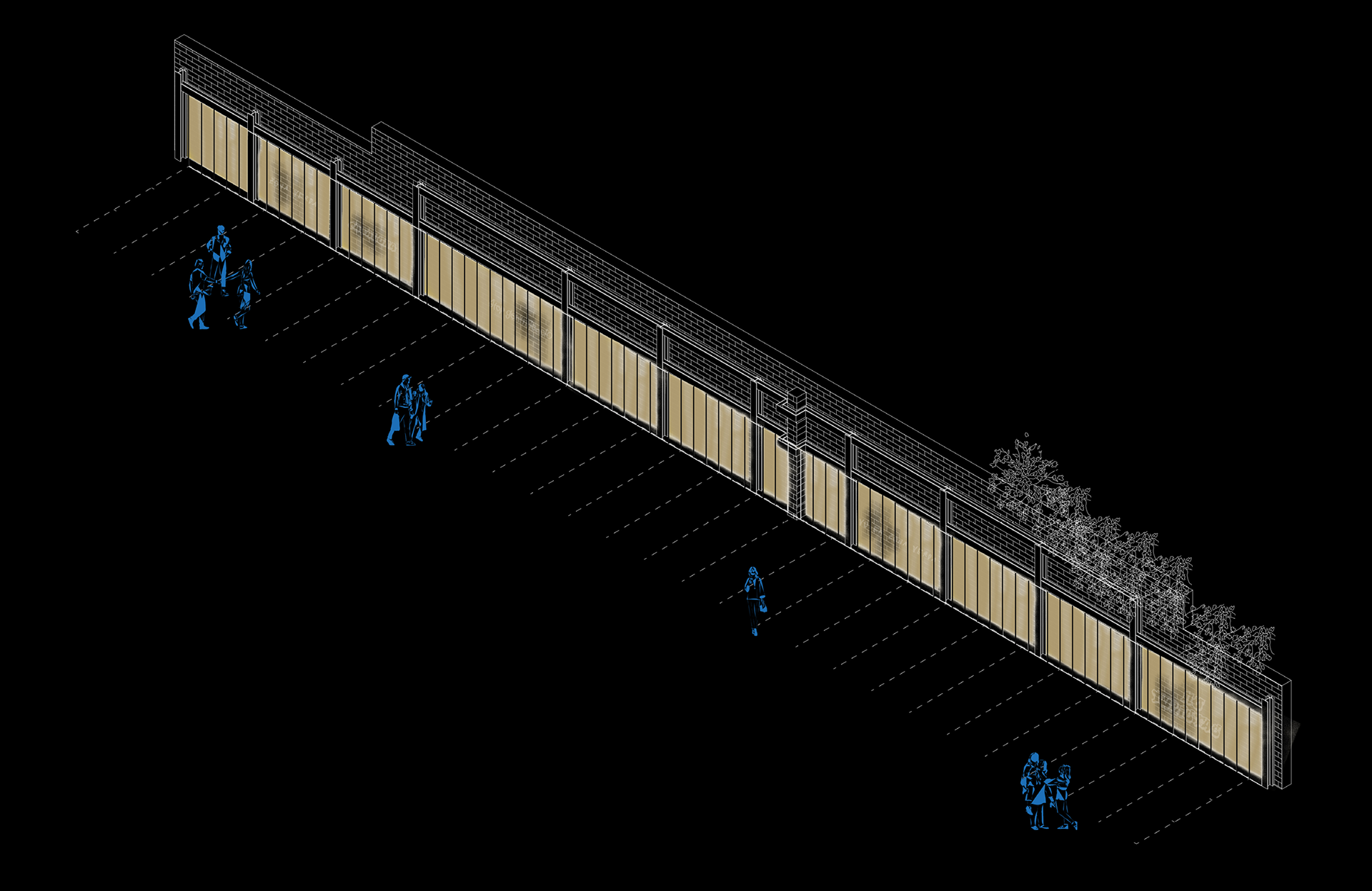
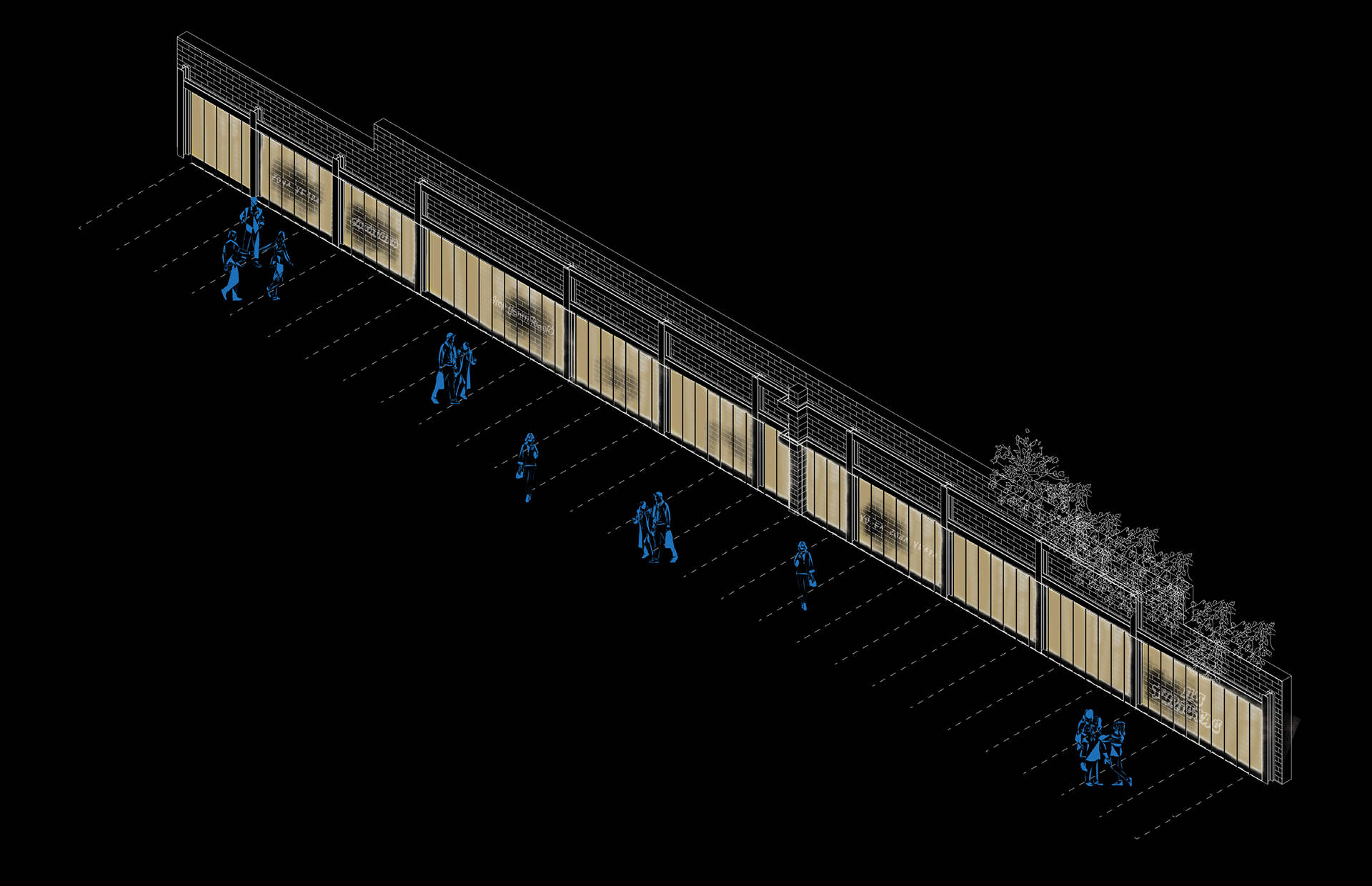
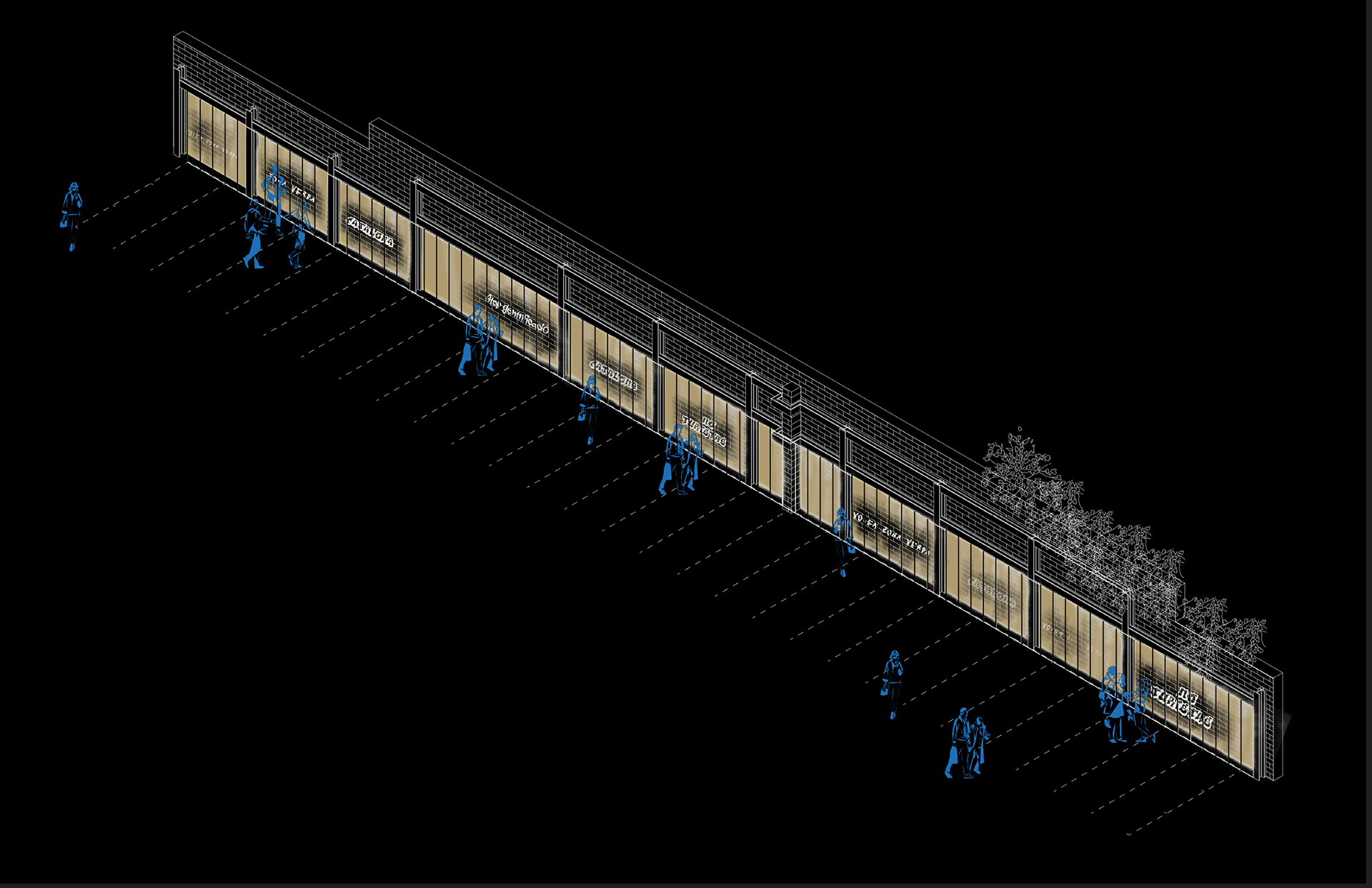
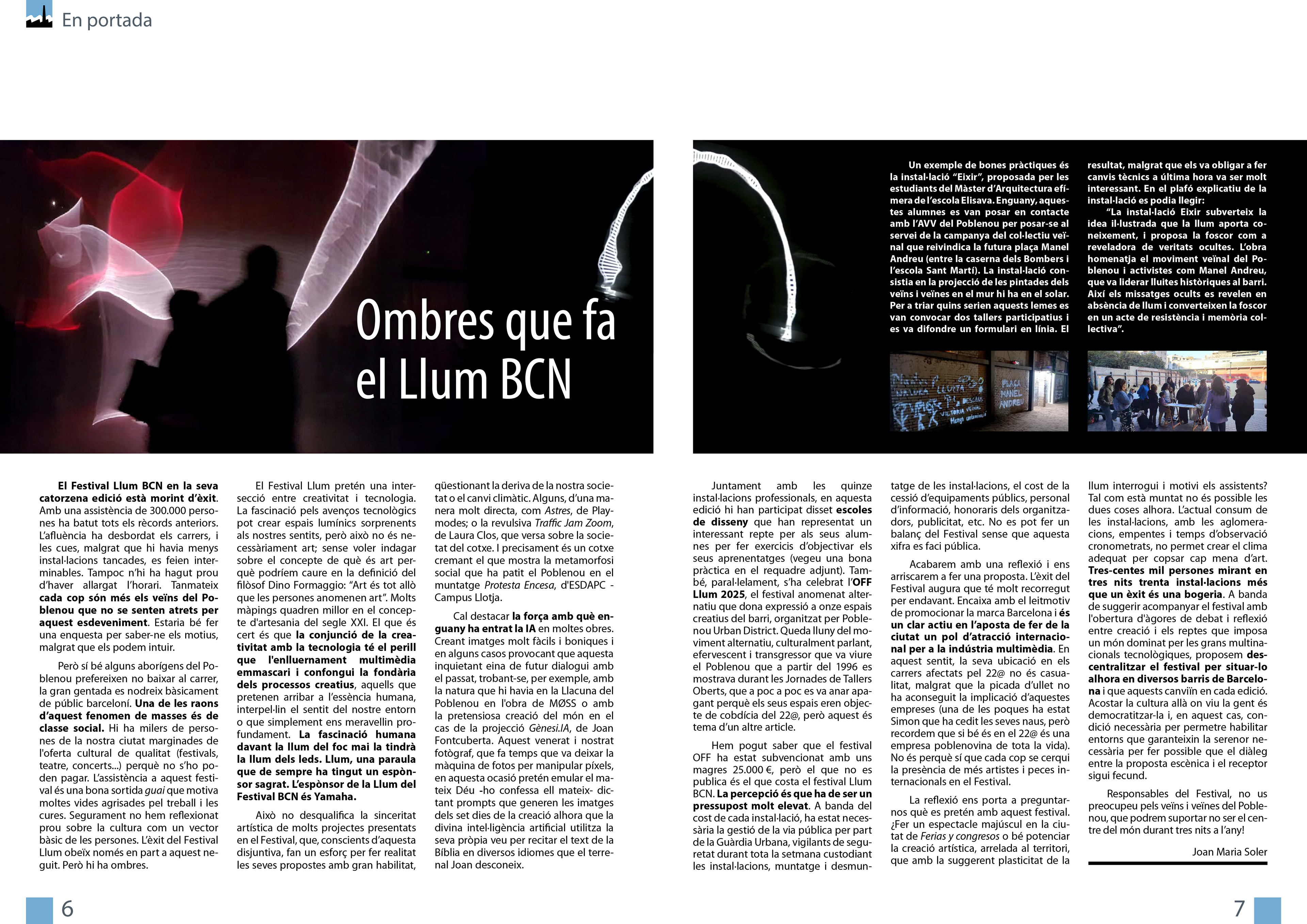
The Eixir installation was recognized as an exemplary initiative in the March 2025 edition of El Poblenou, the official magazine of the Poblenou Residents' Association. The article commends the project for its meaningful engagement with the neighborhood and its innovative approach to community storytelling within the context of the Llum BCN Festival.