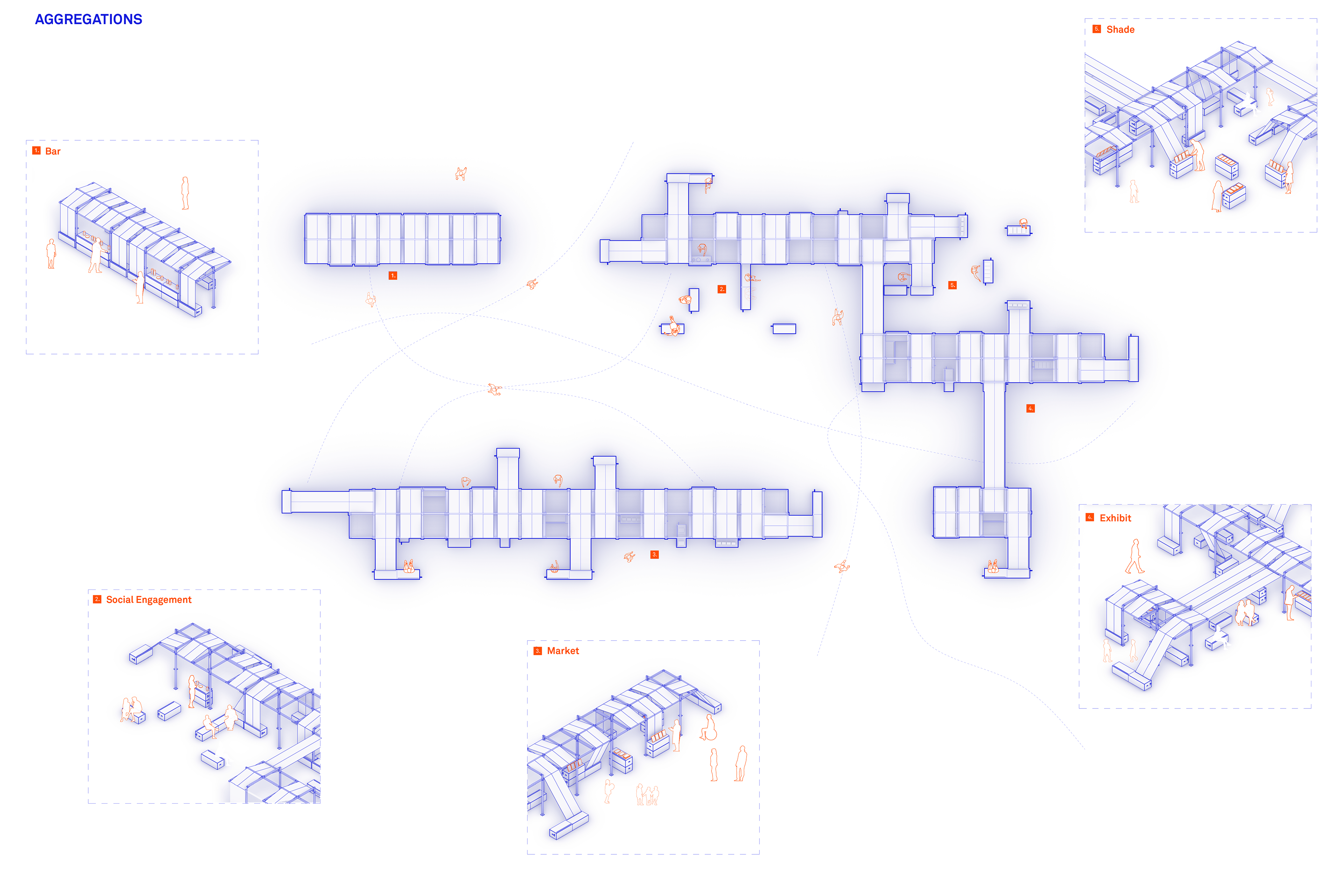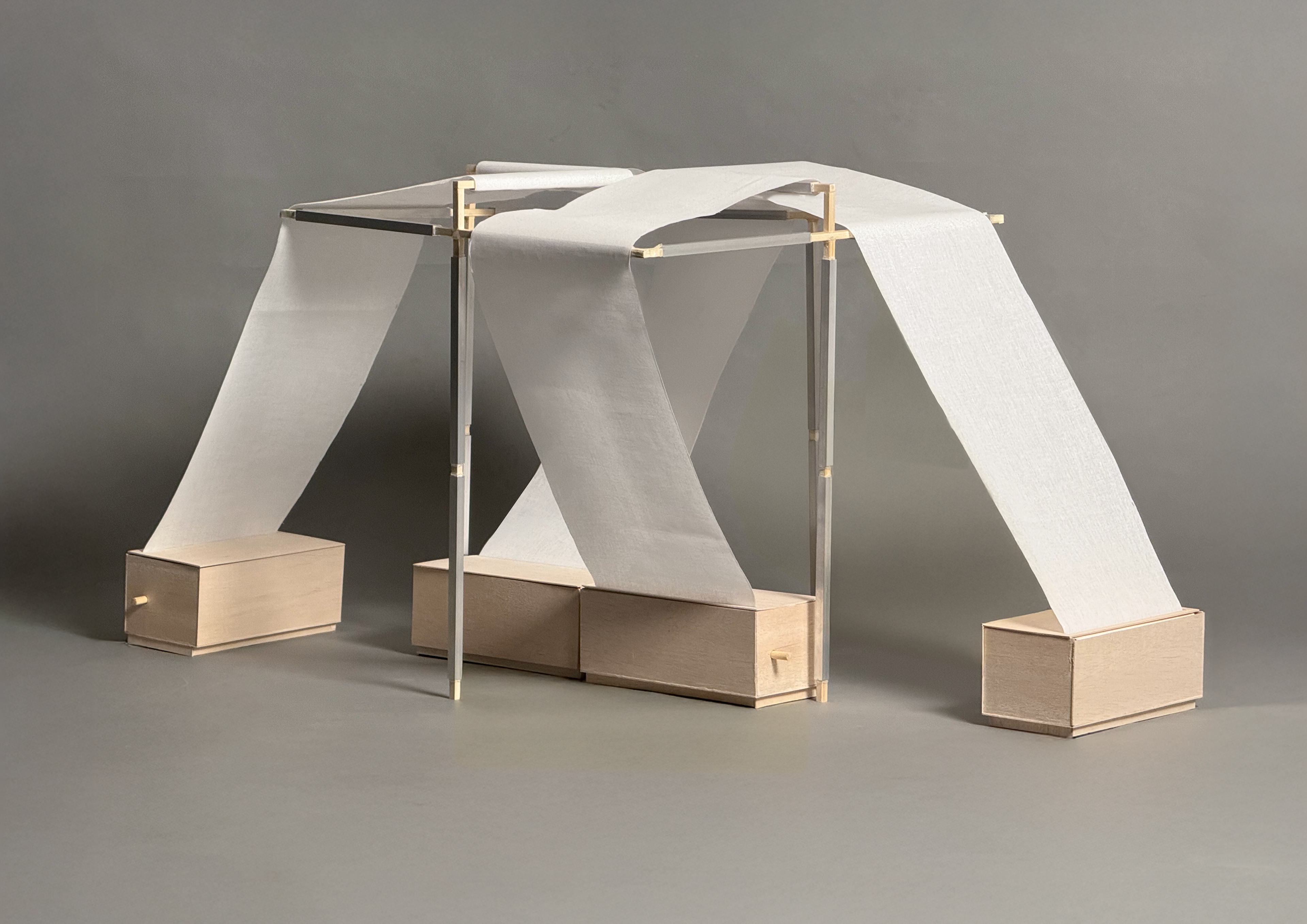
Espais Infinits is a modular, transportable stand designed for Òmnium Cultural, one of Catalonia’s most influential civil society organizations. The project responds to the need for a flexible, recognizable public space structure that reflects Òmnium’s values of identity, culture, and civic engagement.
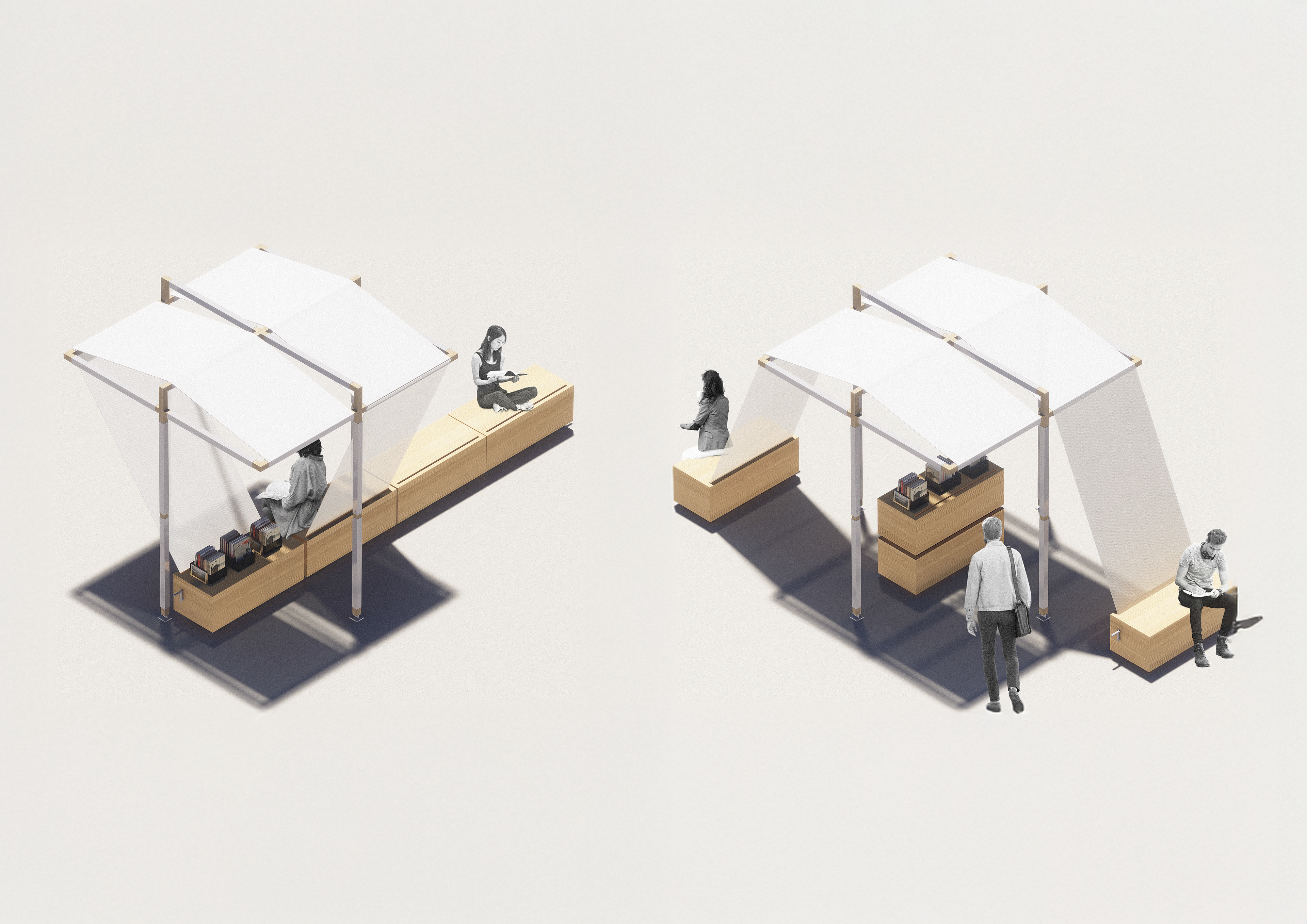
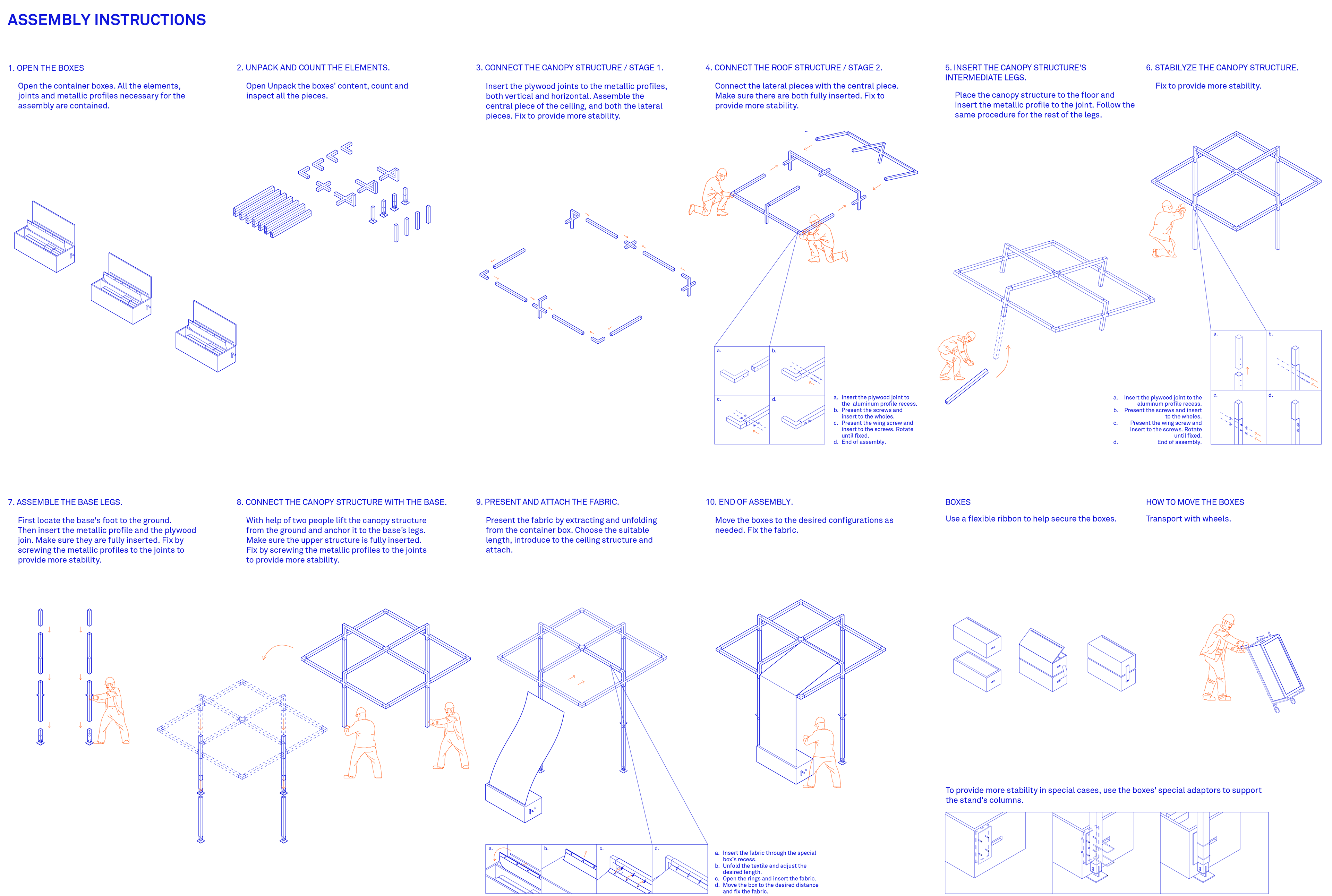
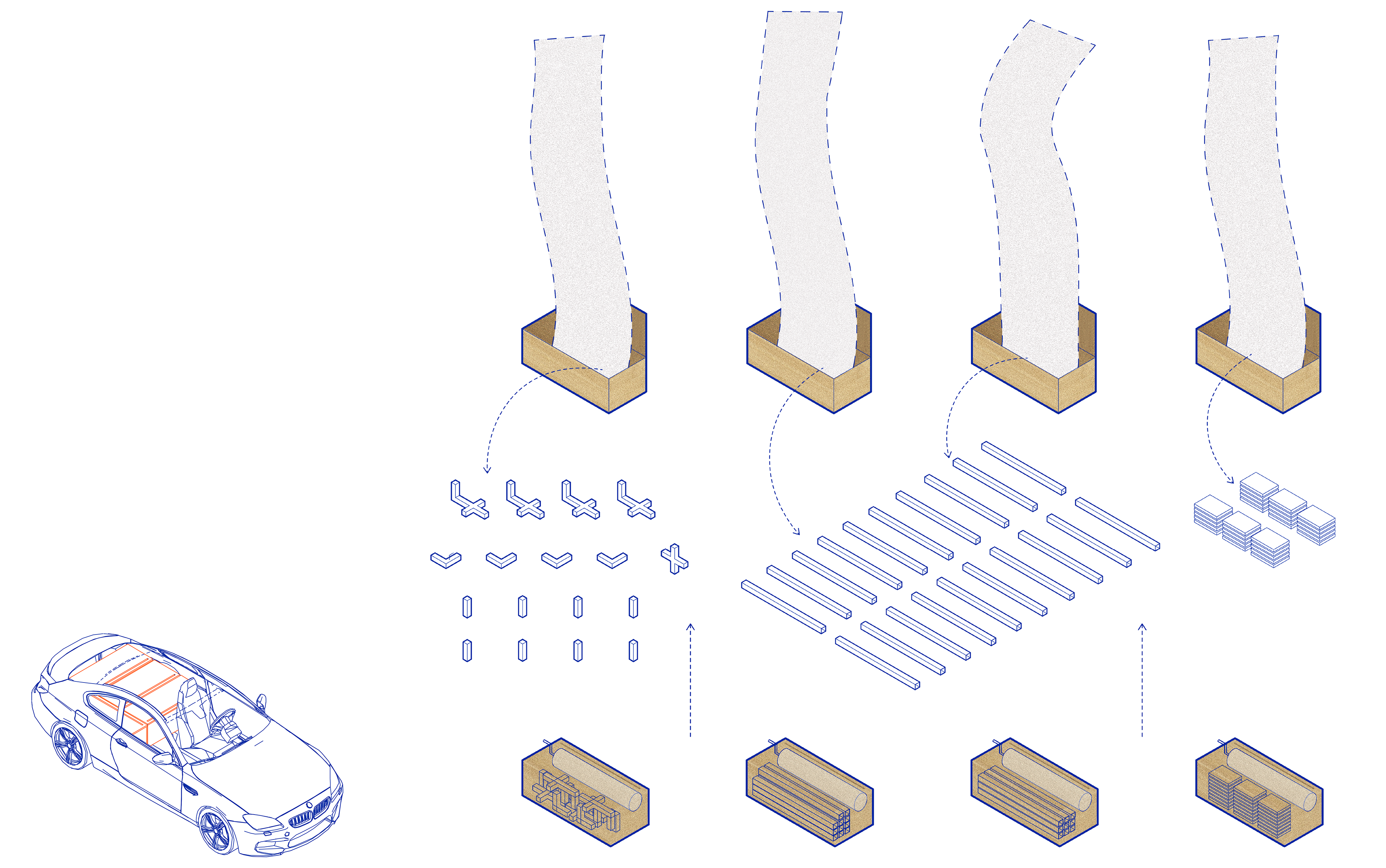
All components are stored within compact boxes that double as structural and spatial elements. These boxes unfold into a canopy supported by lightweight frames and textiles, allowing for adaptable configurations depending on use: from exhibitions and markets to shaded gathering spaces.
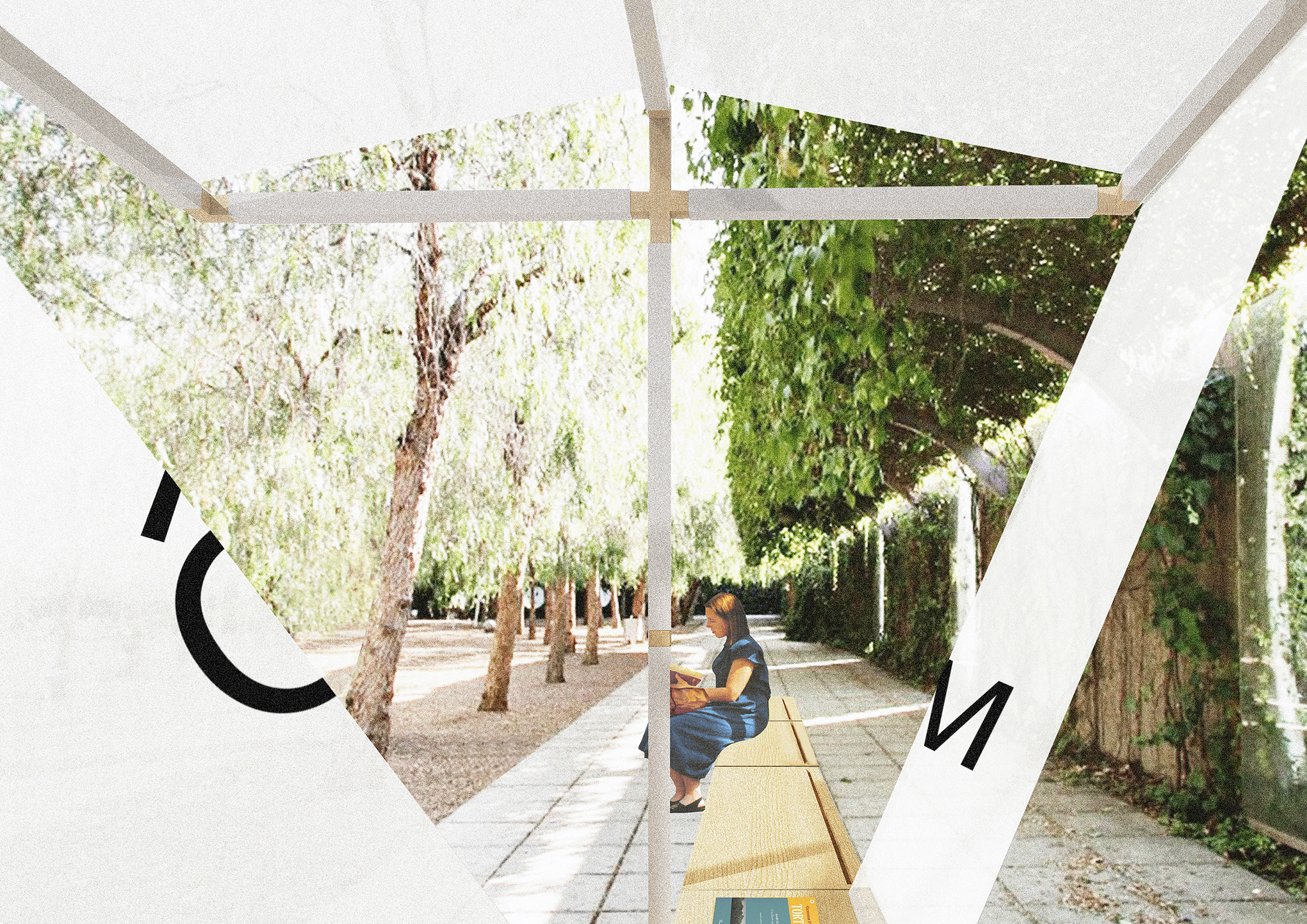
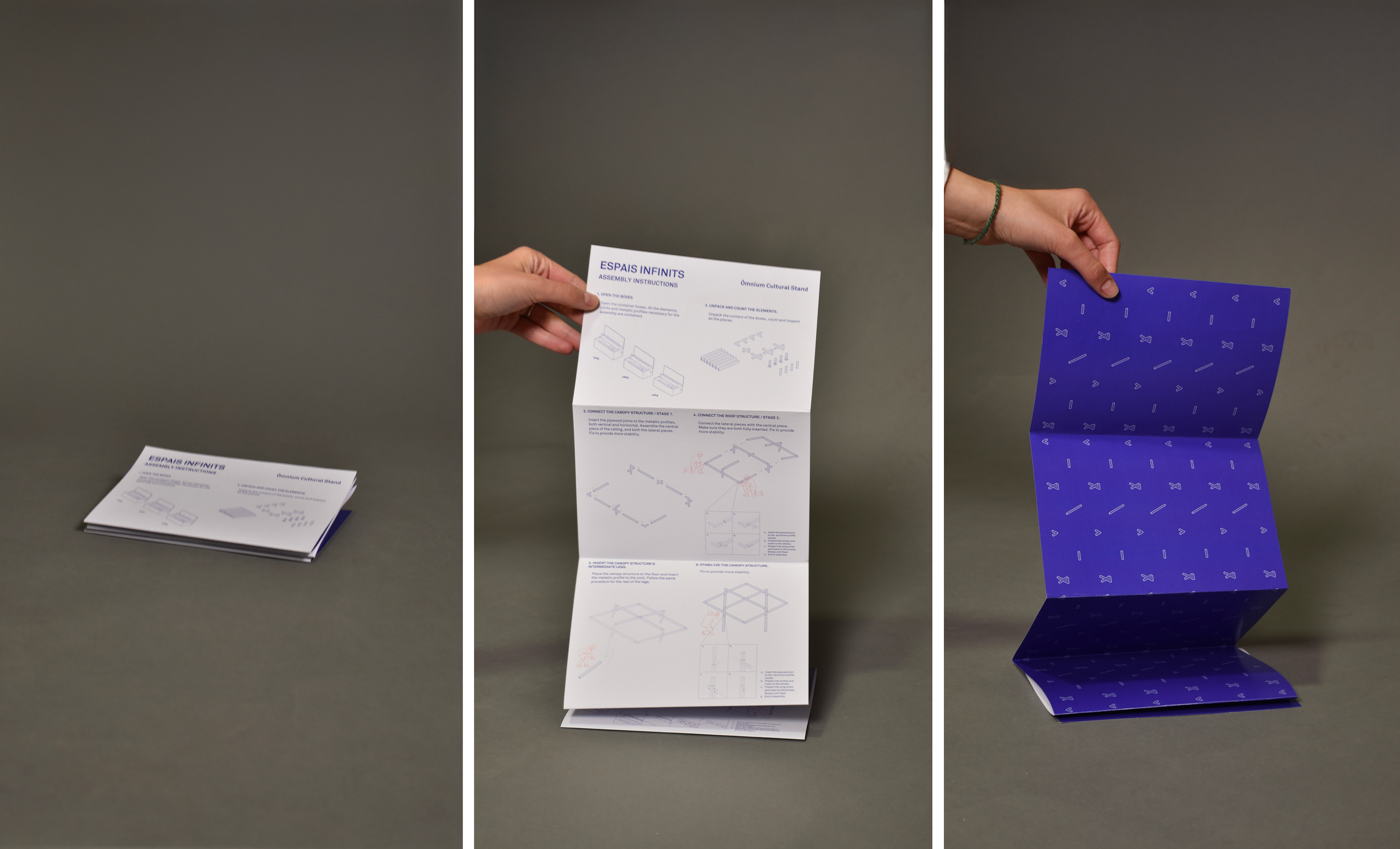
The textiles serve multiple roles: protection from the elements, dynamic play with light and shadow, and a canvas for social messaging or graphic identity. The system is designed to be tool-free, easy to assemble, transportable in a standard car, and suitable for deployment in various public spaces.

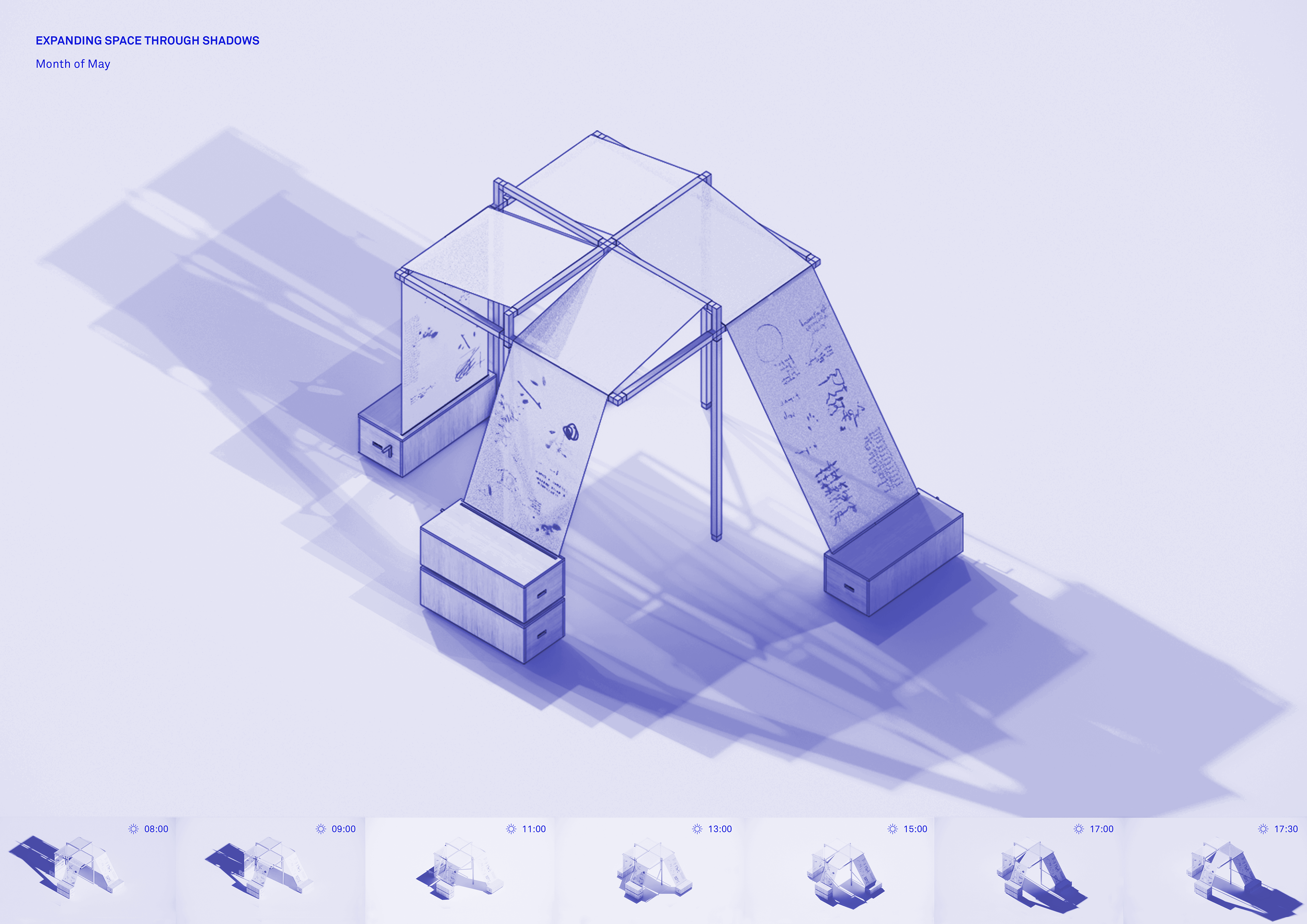
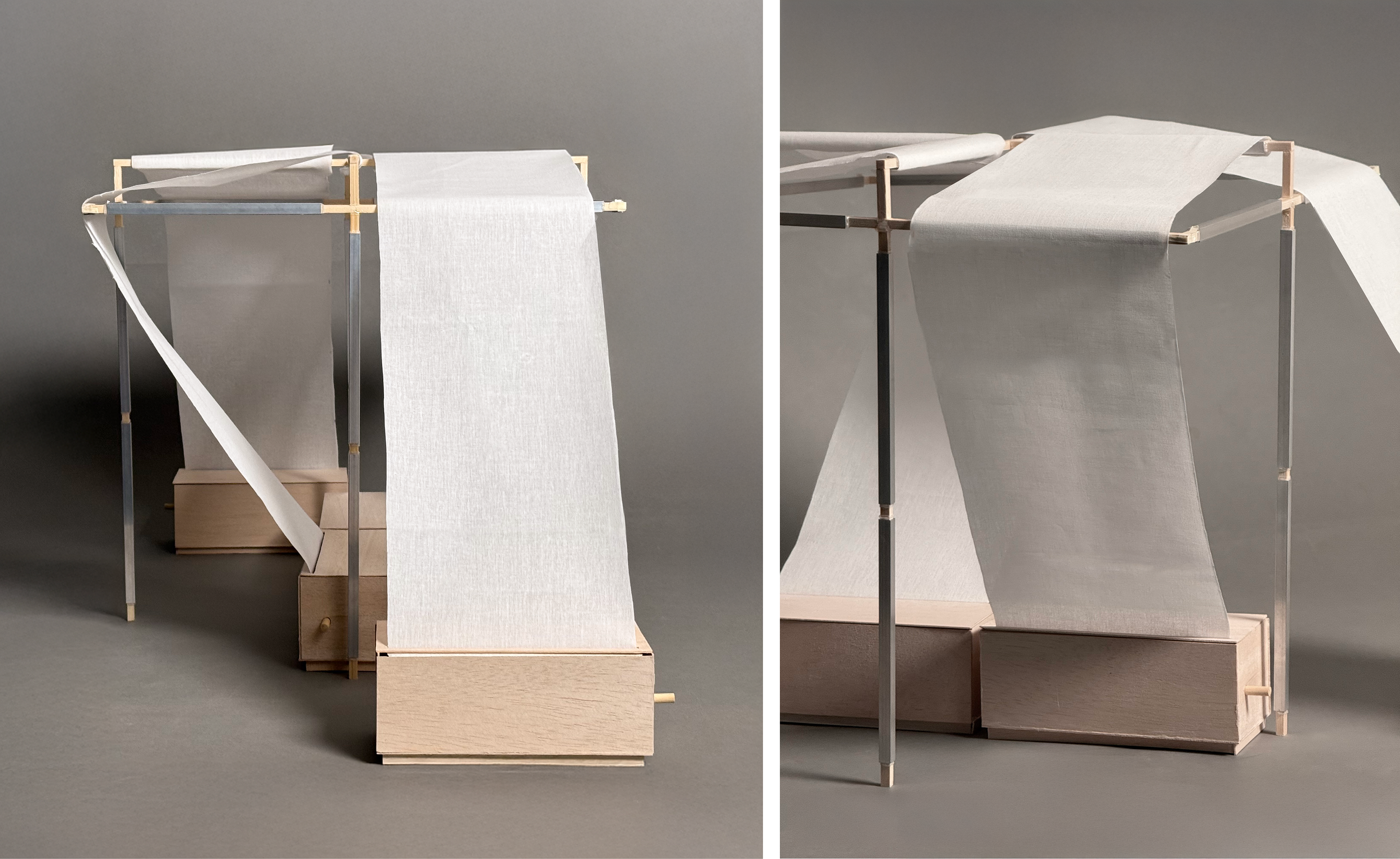
The stand is built entirely from components stored in transportable boxes, which can fit in a standard car. These boxes not only contain all necessary elements but also form part of the stand’s structure, supporting the fabric and enabling various spatial configurations, even extending beyond the main structure. The fabric is rolled inside the boxes and can be pulled out to create the canopy, adapting to different uses depending on its position. This flexibility allows for a dynamic, expanding space.
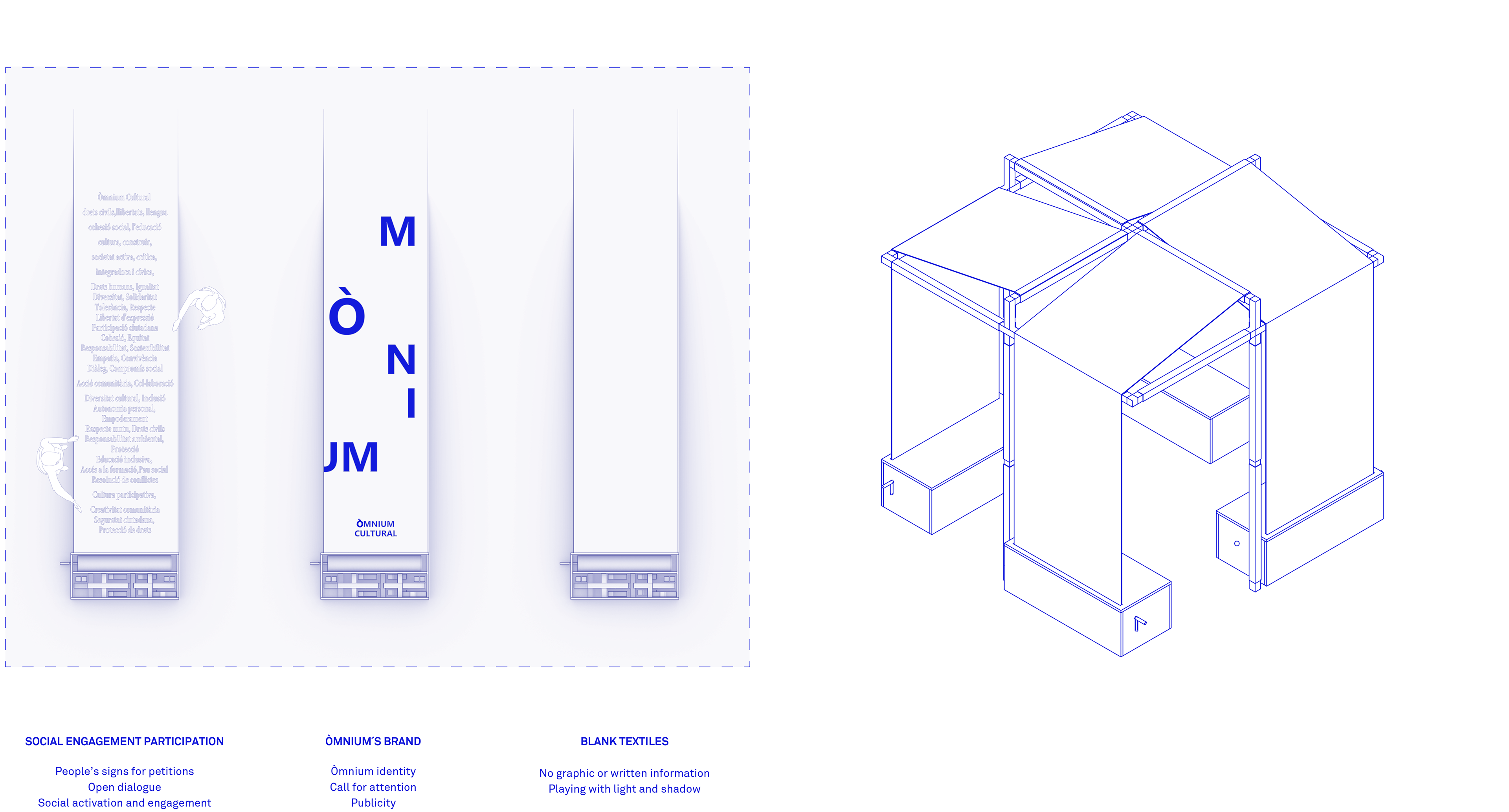
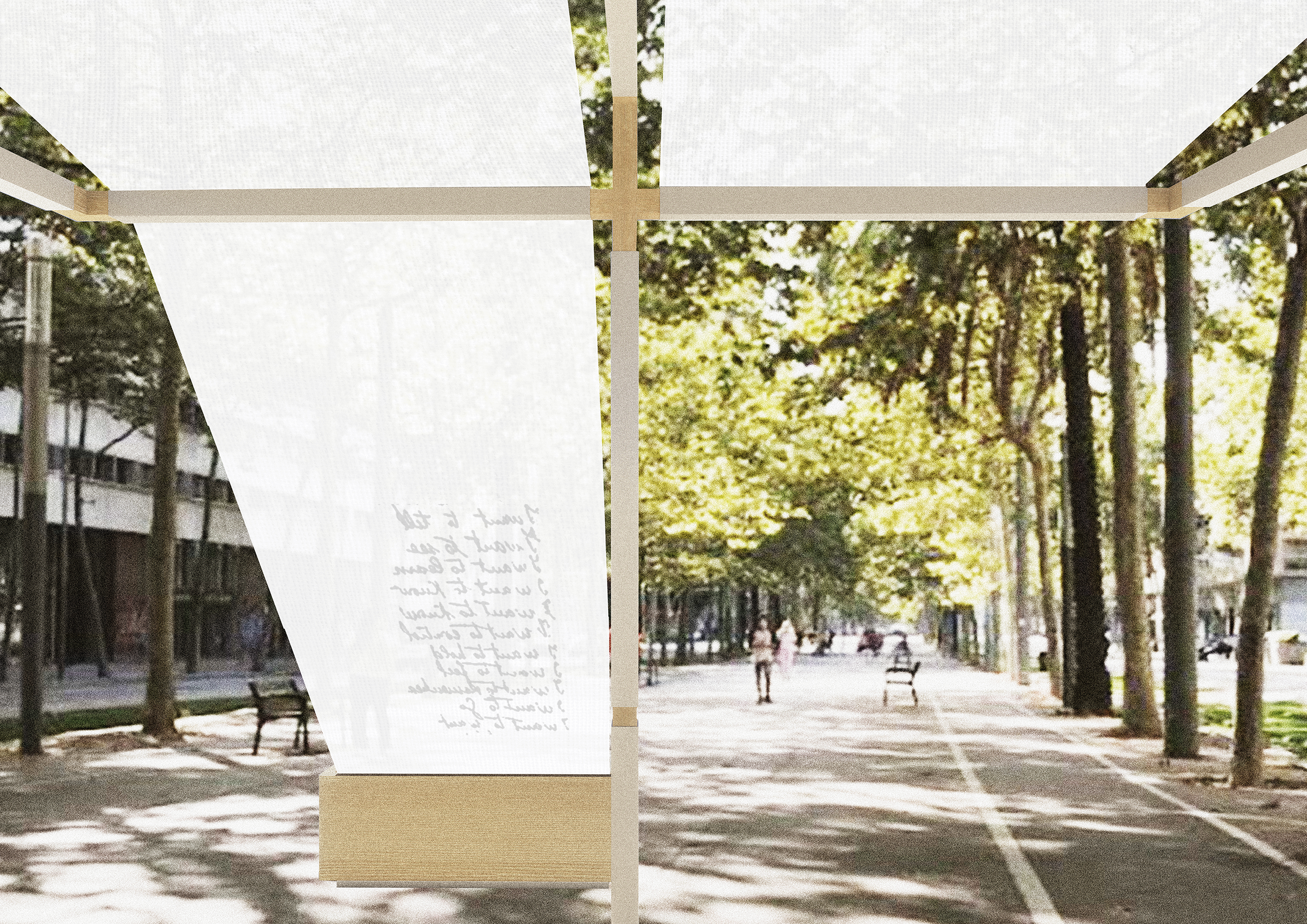
The textiles are used mainly as a protection from the sun and weather conditions, but they also consist in a vital part of the final propo sal. They are used as a physical expansion of the space, an element that plays with the light and shadows and also as a canvas that can reflect social gestures. The textilecan be used as a surface for people’s partici pation, and an opportunity for visibility of current matters and social engagment. It is also used as a surface for the NGO's visual identity to be printed, for promotional purposes and to attract attention. Finally, the textiles can be used without designs, serving as surfaces that interact with people, the space, and the environment.
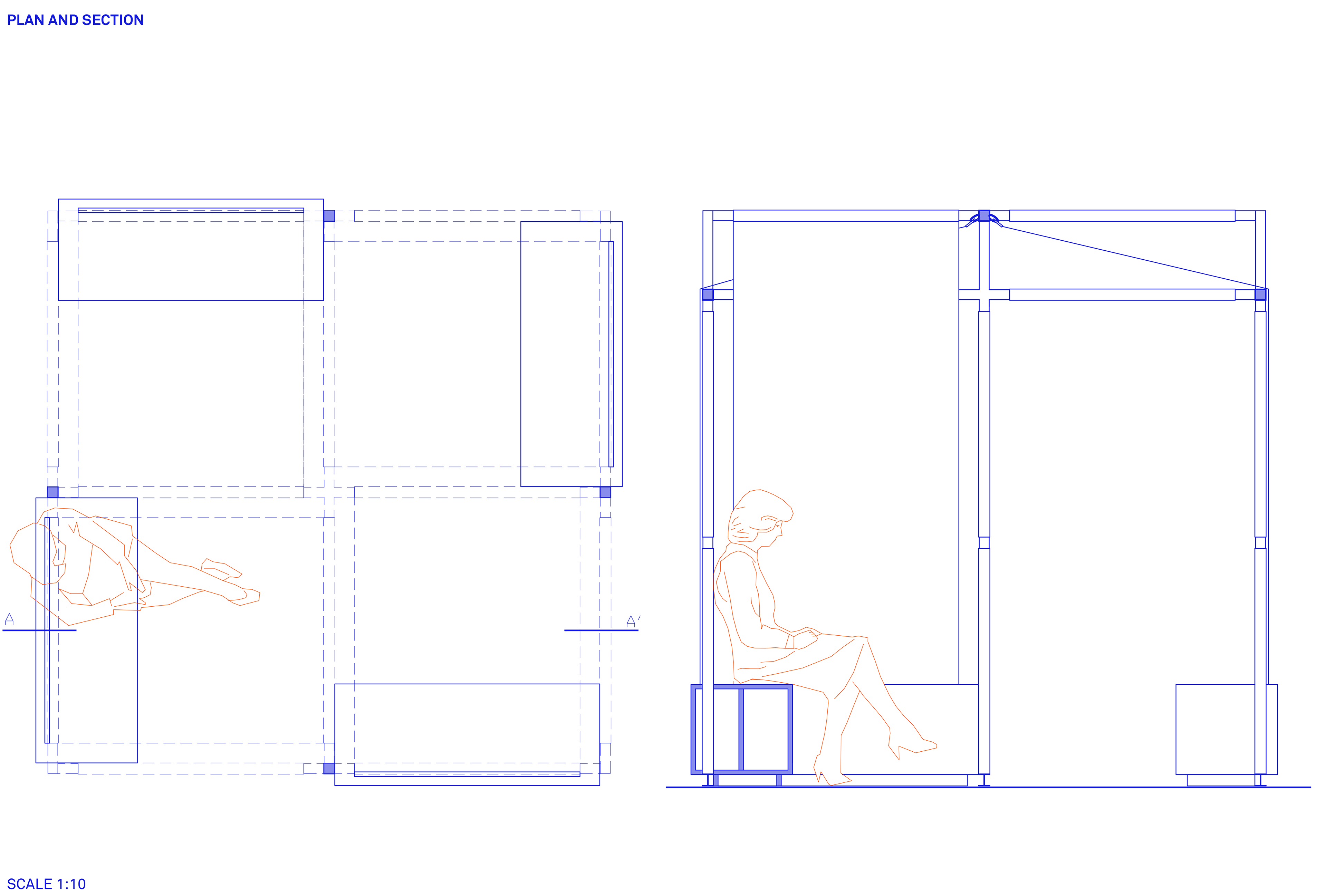
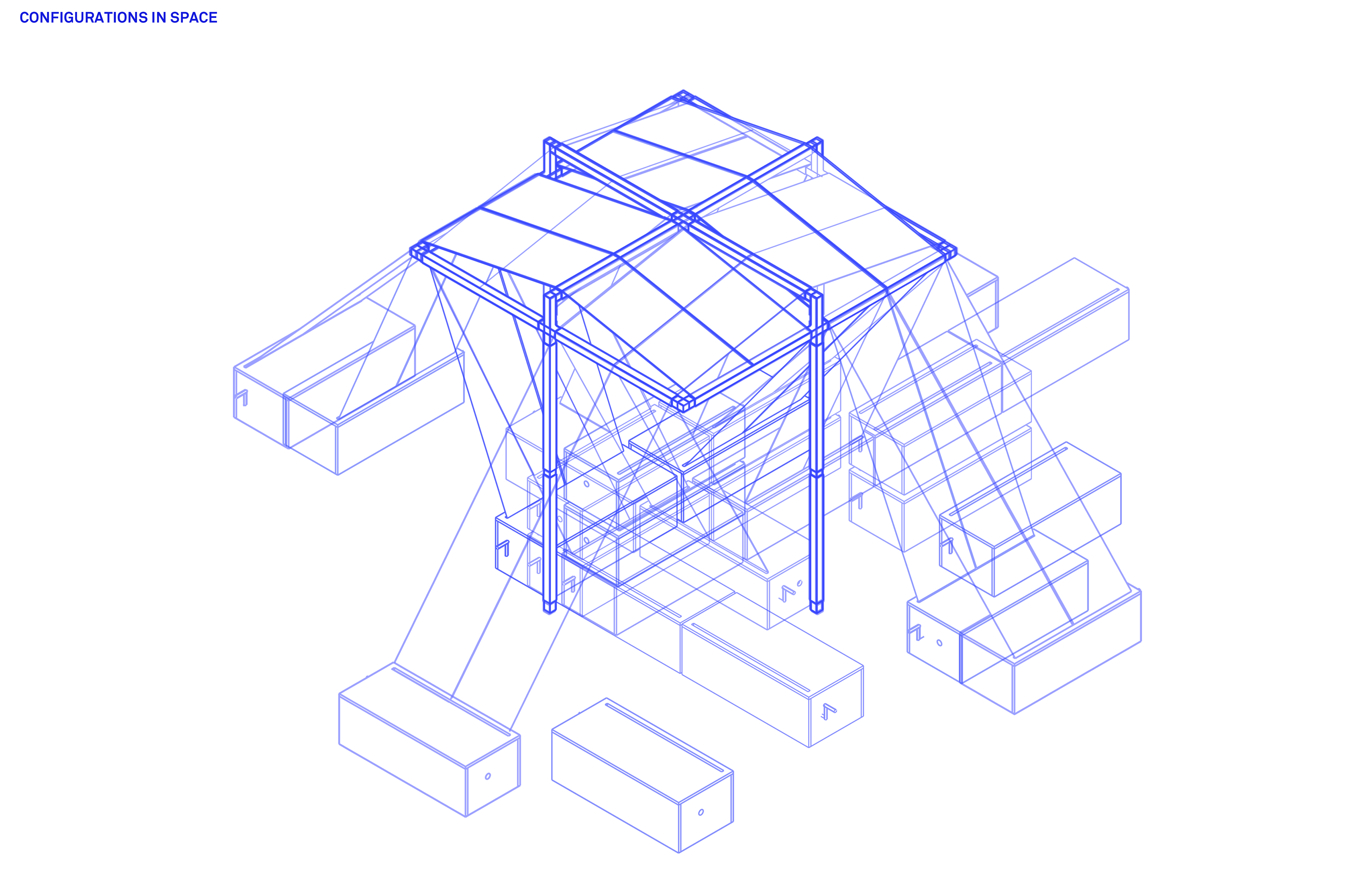
Stand Prototype and Different Configurations

Credits: 

This project was developed at Elisava Barcelona School of Design and Engineering (UVic-UCC) during the 2024–25 Master in Ephemeral Architecture and Temporary Spaces (MEATS), within the Grau en Disseny i Innovació program. 
It was guided by professors Toni Montes, Roger Paez and Jordi Queralt Suau
It was created collaboratively by the class, including Gwendolyn Ackermann, Yi An, Ilia Bempi, Sofia Burin, Enrico Carnielli, Valeria Checa, Catalina Codino, Francisco Coloma, Tania Lakkis, Stuart Medcalf, Lea Naim, Gabriella Nucara, Raquel Quintana, Beatrice Rancati, Jose Maria Rodriguez, Eva Stamatiou and Stefania Zanetti.
Back to Top